


Industries: wine and spirits
Wine and spirits: know where every case ends up
Fake wine, refilled bottles and diverted cases cost you sales and trust in the markets you worked hardest to open. Securicode puts a code on every bottle, case and pallet.
In short
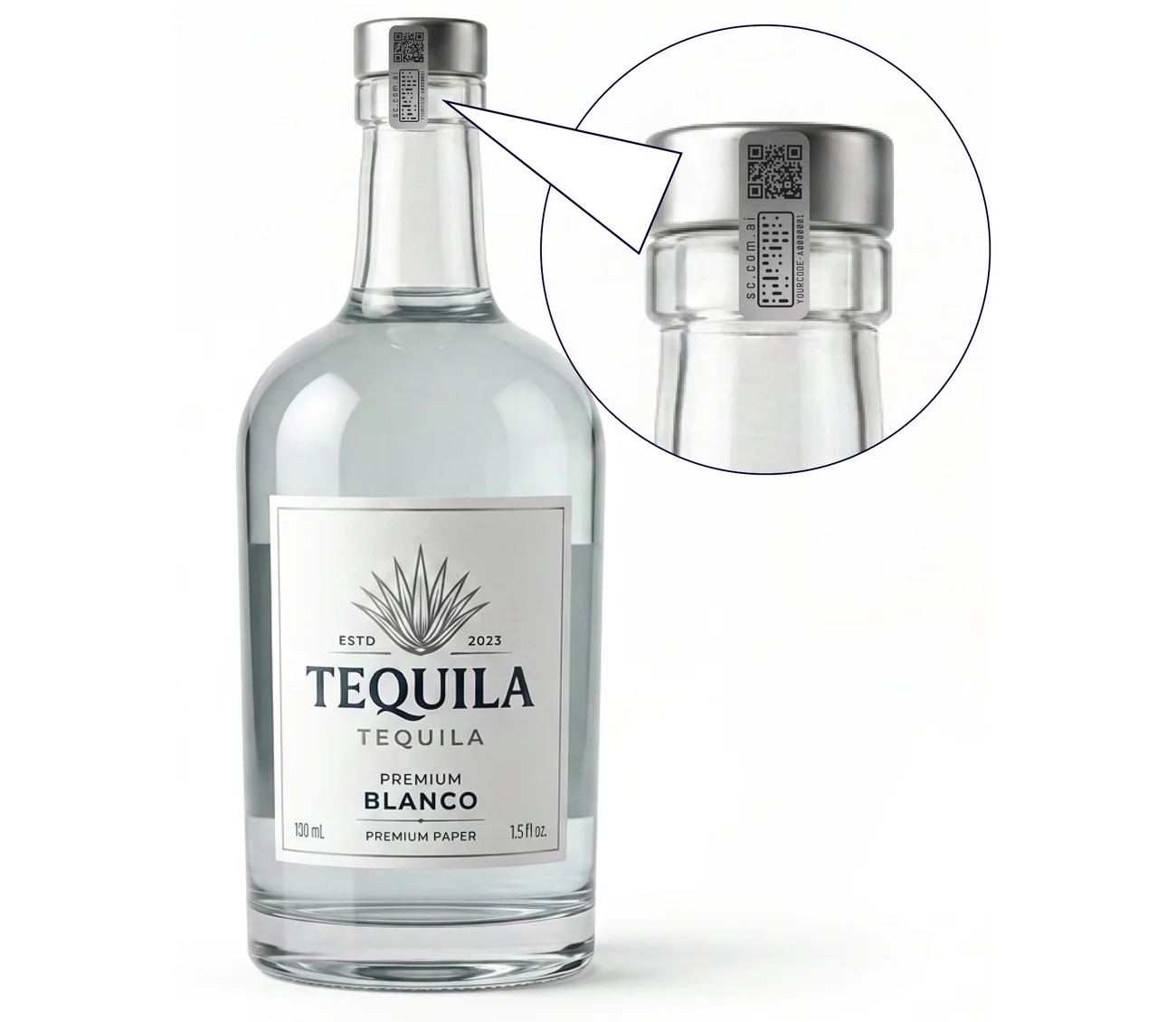
Wine fraud covers fake wine, refilled genuine bottles, copycat labels and genuine cases diverted into the wrong markets. Securicode protects wine and spirits with a code on the capsule or label of each bottle, linked to its case and pallet. Anyone can scan it with the free app, every scan is mapped, and copied codes or stock in the wrong country show up on your dashboard.
How big is the wine fraud and fake alcohol problem?
Counterfeit alcohol is a steady, profitable trade. The EU Intellectual Property Office estimated that fakes cost EU producers about €740 million a year in spirits sales (4.4%) and €530 million in wine sales (2.3%) (EUIPO, 2016). In June 2026, Chinese authorities seized more than 75,000 cases of counterfeit alcohol (The Drinks Business, 2026).
Australian wine is a known target. Penfolds, known in China as Ben Fu, has spent years in court against copycats, and in 2017 Shanghai police seized 14,000 bottles of fake Penfolds (The Drinks Business, 2017). In February 2026, a Chinese appeal court was reported to have ordered the Rush Rich copycat to pay RMB 70.56 million, about US$10.2 million, including punitive damages (Vino Joy, 2026). We mention it as a public example of the problem. Penfolds is not a Securicode customer.
You may see the claim that 20% of all wine is fake. We do not use it. It traces back to a 2013 estimate about fine Bordeaux and Burgundy, not wine in general.
Why are refilled bottles so hard to spot?
The most convincing fake wine is in a genuine bottle. Empty bottles of premium wine and spirits are collected and refilled with something cheaper, with the original label still in place (Marks and Clerk). No label check will catch it.
Placement makes the difference. Printed across the capsule, a Securicode stays readable on the bottle but breaks when the bottle is opened, so a refilled bottle shows a broken code or none. On destructible labels, the code is tamper-evident.
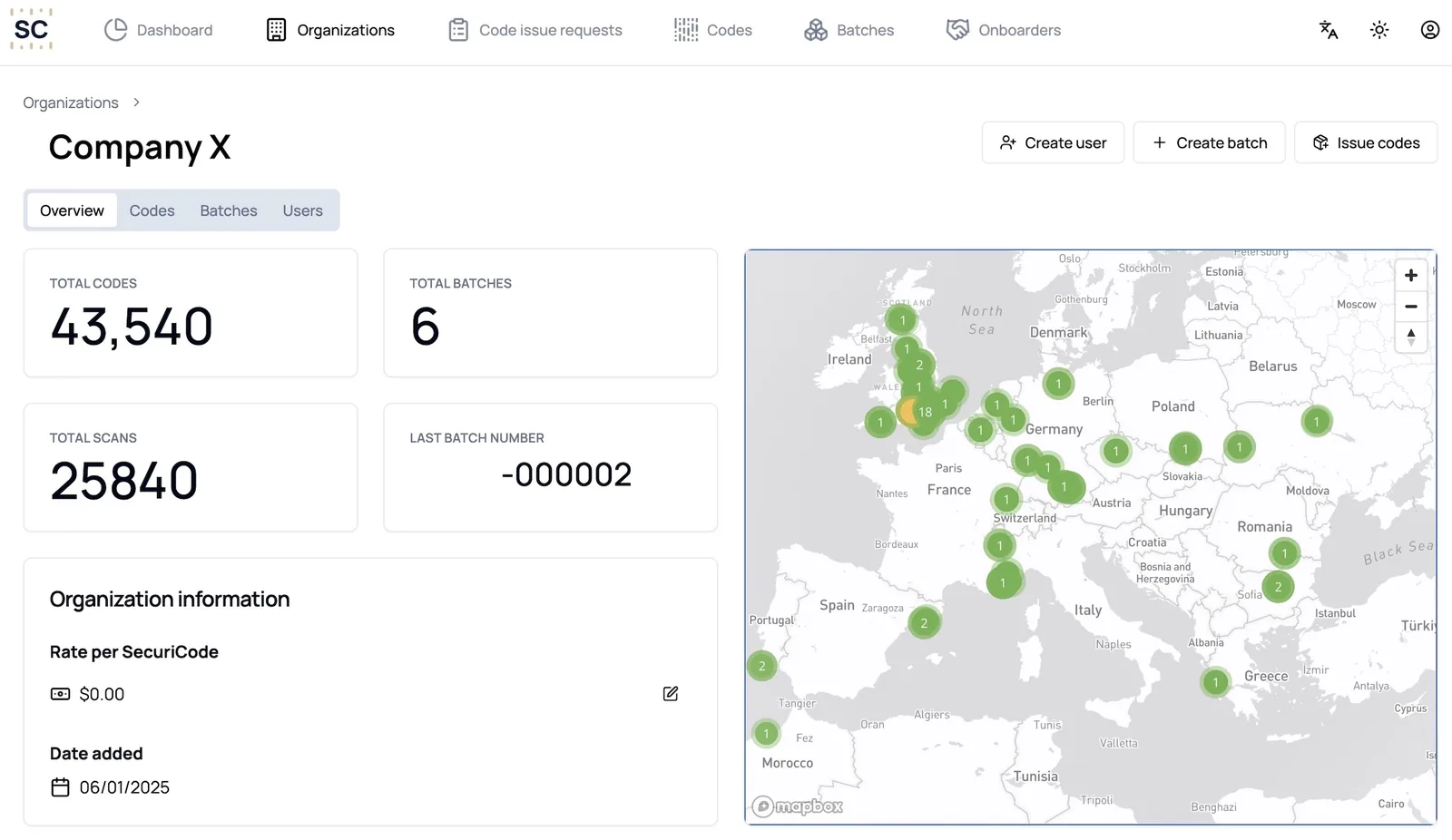
Each bottle also has its own code. A refiller who copies one bottle's code onto many will see it flagged on your map as the scans pile up.
- Placed on the capsule so the code breaks when the bottle is opened
- Phone-scannable at 1.2mm, small enough for a bottle neck
- Reads down to 3% contrast on capsules, labels and glass
- Works with the label software wineries already use
Case and pallet aggregation
Every bottle linked to its case and pallet
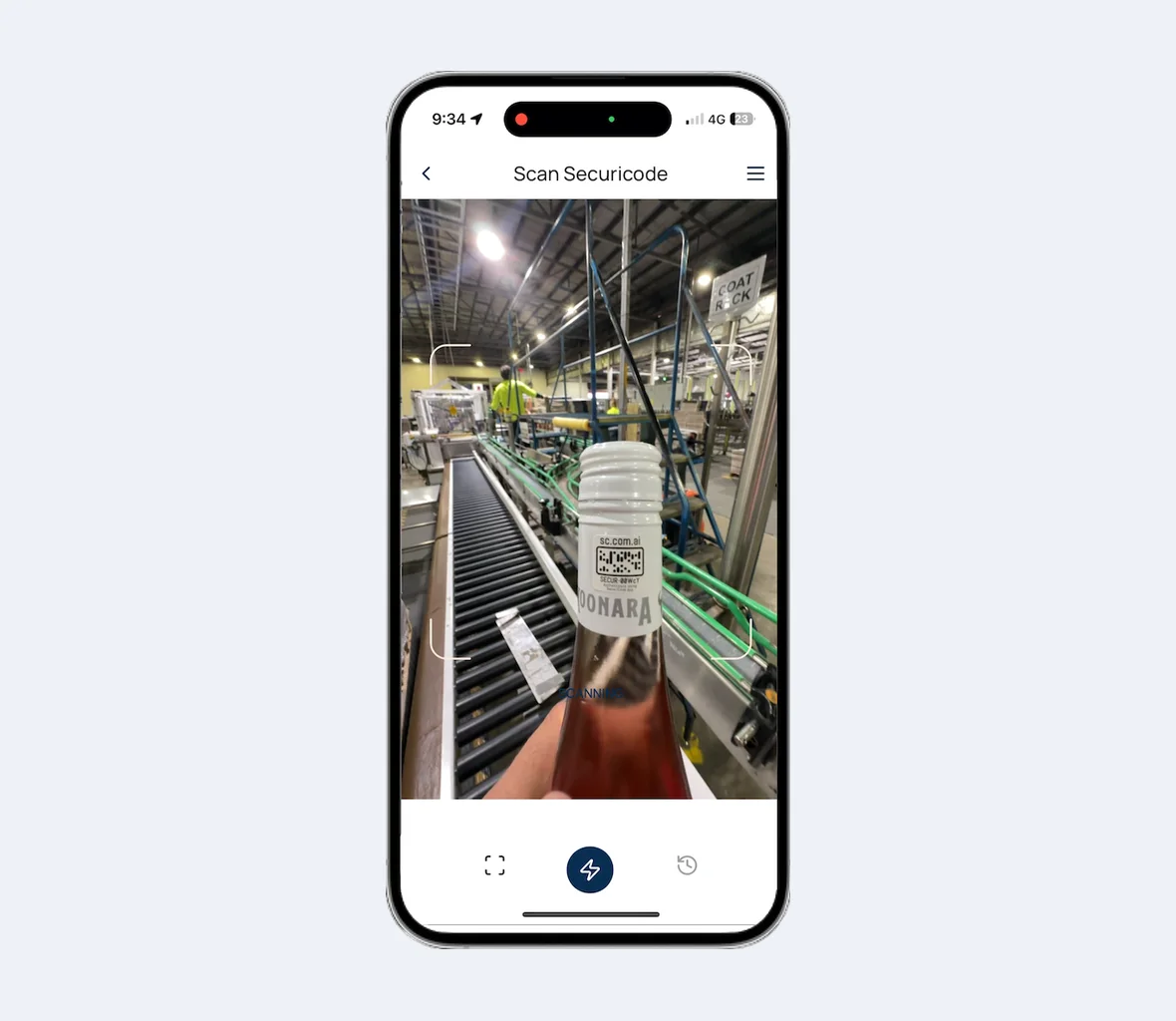
At packing, bottle codes are linked to the case code, and cases to the pallet. Scan a pallet at the port or a case in a distributor's warehouse and you know exactly what is inside.
When a bottle turns up somewhere unexpected, one scan tells you which case and pallet it left the winery in, and which export order it belonged to.
Exporting to Asia: fakes and gray market in one view
Asia is where many Australian producers meet both problems at once. Copycat brands and refilled bottles sit beside genuine cases sold to one market and resold in another. Australian wine exports were worth A$2.3 billion in the year to June 2026, down 7% (Wine Australia, 2026), so every case in a growing market counts.
With Securicode, scans in Hong Kong from a pallet shipped to Singapore stand out on your map, and so do repeat scans of one bottle code across several cities. You can raise the specific shipment with your distributor, and hand time, date and location records to investigators and lawyers when fakes appear.
In Southeast Asia, Drinks Network, a Sydney-based drinks industry services company, resells Securicode to producers fighting illicit alcohol, and offers help with setup, training and alerting authorities.
What your current protections do, and where they stop
| Protection | What it does well | Where it stops |
|---|---|---|
| Registered trade marks | Lets you act against copycat brands and lookalike labels | Does not prove a single bottle is genuine |
| Wine Australia Label Directory | Since 1 June 2021, exporters upload label images before export approval, and anyone can search them in English or Simplified Chinese | Shows a label was legitimately exported, not that the wine in the bottle is real |
| Holograms and special capsules | A visible deterrent on the shelf | Can be copied, and give no alert when they are |
| Open QR codes | Easy product information for customers | Anyone can make or copy one, and copies work the same |
| Securicode | Issuer-only code on each bottle, linked to case and pallet, with every scan mapped | Works best when partners and customers scan, so build scans into your channel |
Label Directory details from Wine Australia. Trade mark enforcement remains essential: codes and trade marks do different jobs.
Built for the people who carry the export risk
Export managers and GM Asia
See where every case ends up, check distributor reports against scan data and spot diverted stock before it undercuts your price.
Winemakers and production teams
Codes can arrive on pre-printed labels or capsules, and bottles are linked to cases at case packing, so changes on the bottling line stay small.
Managing directors of family wineries
Codes cost cents on the dollar, with no minimum order, no management fees and no ongoing costs, so you can start with the wines and markets that matter most.
Why a wine company built this
Securicode's founder, Dru Reschke, has spent more than 30 years in Australian wine. He founded Koonara Wines in Coonawarra, South Australia, in 1992, and saw first-hand how fakes and diverted stock hurt a brand that has worked hard to open export markets. Koonara is the pilot brand for Securicode.
Adam Wrublewski, Securicode's CEO Europe, brings more than 30 years in spirits, beverages and consumer goods across Australia, Europe and global markets. Between them, they know how wine and spirits are made, sold and diverted. Meet the team.
Frequently asked questions
How can you tell if wine is fake?
Check the label and capsule for poor printing, compare the price with genuine stock and buy from authorized sellers. For Australian exports, you can look the label up in Wine Australia's ELISS directory. The most reliable check is a code the producer issued for that bottle: if it carries a Securicode, scan it with the free app and see where else it has been scanned.
What is wine fraud?
Selling wine that is not what the label says: fake bottles, refilled genuine bottles, false vintages or regions, copycat brands, or genuine wine diverted outside its approved market.
Can Securicode stop bottles being refilled?
Placed across the capsule, the code breaks when the bottle is opened, so a refilled bottle shows a broken code or none. No physical feature stops every refill, but this makes refills far easier to detect.
Does it work for spirits as well as wine?
Yes. The same codes go on spirits capsules, labels, gift boxes, cases and pallets, and work the same way.
Do I have to code every bottle?
No. Many producers start with their most copied or most diverted wines and their riskiest export markets, then expand.
Keep reading
Make every product provable
Apply for access to create Securicodes for your brand, or book a demo and we will show you a live scan.