


How it works
Item to container tracking for supply chain traceability
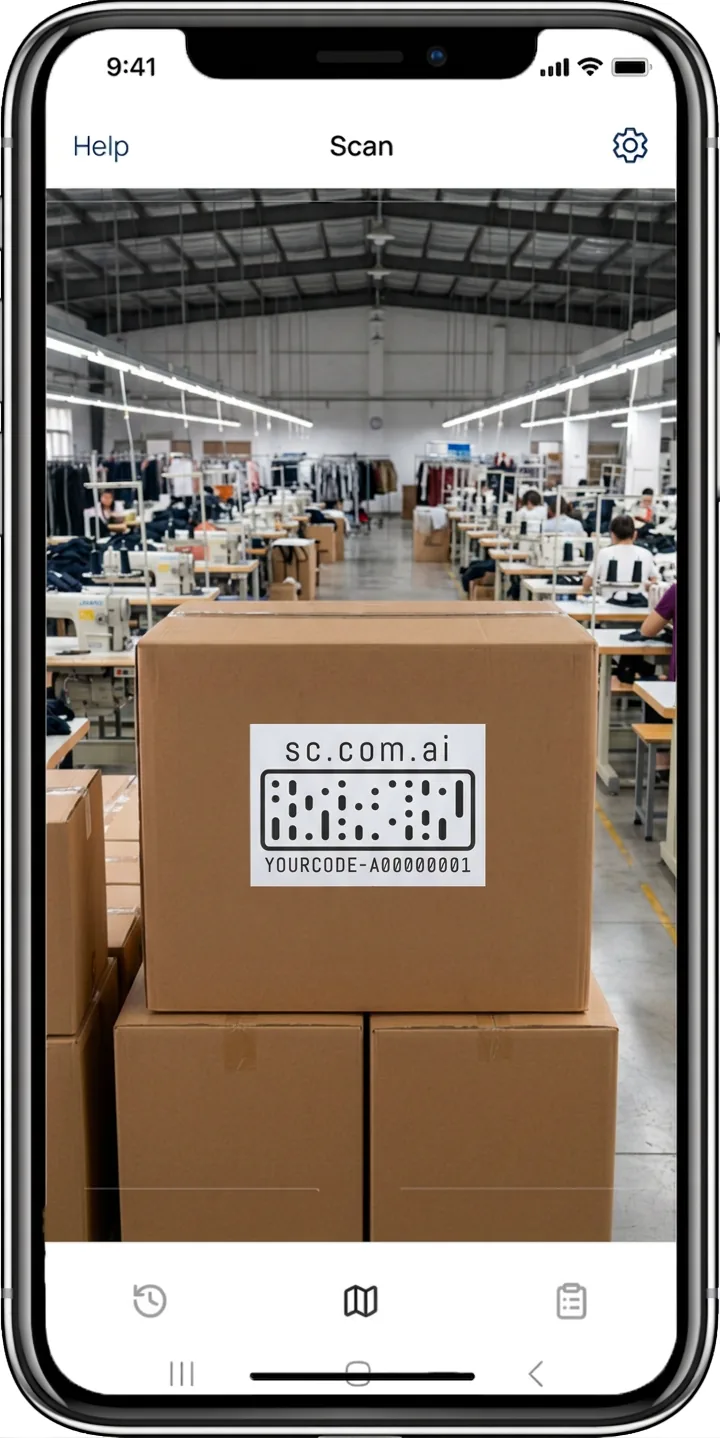
Parent and child codes link each product to the case, pallet and container that carried it. Scan the outside, know what is inside.
In short
Securicode supports product traceability with parent and child codes. Each item code is linked to its case, each case to its pallet, and each pallet to its container, like a set of Russian dolls. Scan any level and you see what it contains, where it has been scanned, and which items to mark if stock is stolen or diverted.
Parent and child codes
How do parent and child codes work?
Every Securicode can be a parent, a child, or both. An item code is the child of a case code. The case is the child of a pallet, and the pallet is the child of a container.
Because the links are recorded, one scan at any level tells you what sits beneath it. Scan a container and you know which pallets, cases and items were packed into it, without opening a single box.
From factory to customer
How does item level traceability work in practice?
- 1
Code the items
Each product gets its own unique code, printed, etched or woven on during production.
- 2
Link items to cases
When items are packed, the case code is linked to the item codes inside it.
- 3
Link cases to pallets and containers
The same happens as cases are palletized and pallets are loaded into containers.
- 4
Scan at any point
Warehouse teams, distributors or inspectors scan the outer code to see what is inside. Every scan adds to the location history.
- 5
Customers scan the item
The end customer scans the product itself and sees it is genuine. You see where it was bought.
Scan one pallet, know what is inside
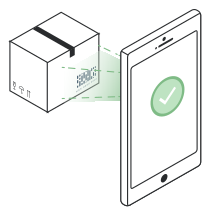
Receiving a pallet usually means trusting a packing list. With linked codes, one scan of the pallet shows what was packed into it, down to each item code.
Pallet codes can also carry shipping documents, so the paperwork travels with the goods and can be updated without relabeling.
- See the contents of a case, pallet or container in one scan
- Attach shipping documents to the outer code
- Follow each level on the map as it moves
What does product traceability give you?
Stolen stock you can mark
If a pallet goes missing, mark every item on it in one action. Those products show as not genuine when scanned, which lowers their resale value, and every scan still lands on your map.
Gray market visibility
When an item from a pallet shipped to one market is scanned in another, you know which pallet it came from and where it surfaced.
Learn more →Real sales geography
See where products are actually bought and used, as well as where they were shipped.
Supplier visibility
Can you see your 2nd and 3rd tier factories?
You know your first-tier supplier. The harder question is who they subcontract to. Unauthorized factories, overruns sold out the back door and hidden workshops are where counterfeits and ethical risk often begin.
Securicodes can be issued to each factory in your chain. Every carton scanned on a factory floor is logged on your map with its location, so you can see where goods are really made and spot production that should not exist.
- Every tier mapped by scan location
- Unauthorized subcontracting exposed when codes scan at unknown sites
- Overruns counted against the codes you issued
The same records support origin claims and work alongside your Digital Product Passport, which carries the product data while Securicode proves the item is genuine.
Traceability with and without linked codes
| Item codes only | Linked parent and child codes | |
|---|---|---|
| Checking a pallet's contents | Open it and scan each item | Scan the pallet once |
| A pallet is stolen | Mark items one by one, if you know which they were | Mark everything on the pallet in one step |
| Diverted stock found in a market | You know the item | You know the item, case, pallet and container it shipped in |
| Showing where goods were made | Partial | Scan locations at each tier |
Using care labels or a label printer?
Codes can be printed into care labels as part of a normal variable data run, with items linked to cases and pallets. See how it works with care labels.
Frequently asked questions
What is supply chain traceability?
Supply chain traceability is the ability to follow a product from where it was made to where it was sold. Securicode adds it at item level, with every item linked to its case, pallet and container, and every scan recorded with a location.
What is the difference between product traceability and authentication?
Traceability tells you where a product has been. Authentication tells you whether it is genuine. Identifying a product is not the same as verifying it. Securicode does both with one code.
Do I need to code every level?
No. You can start with item codes and add case, pallet or container codes where they help. Linked codes are quoted with your order. See how pricing works.
Can I mark a whole pallet as stolen?
Yes. Mark the pallet and every item linked to it is marked too. Anyone who scans one of those items sees it is not genuine, and you see where each scan happens.
Does this replace my warehouse or ERP system?
No. Securicode is not a warehouse management system. It records which codes are linked and where each code is scanned. Talk to us about how that fits with the systems you already run.
Keep reading
Make every product provable
Apply for access to create Securicodes for your brand, or book a demo and we will show you a live scan.