


Solutions: Digital Product Passport
The authentication layer beside your Digital Product Passport
A DPP tells customers, recyclers and customs what a product is. It does not prove the item in their hand is genuine. Securicode adds that proof on the same label.
In short
A Digital Product Passport (DPP) is a digital record of a product's materials, origin and environmental data, required product group by product group under the EU's Ecodesign for Sustainable Products Regulation (ESPR). It must be reached through an open-standard data carrier, such as a GS1 Digital Link QR code, that anyone can read without a proprietary app. Because that code can be copied onto a fake, a DPP alone cannot prove a product is genuine. Securicode sits beside the DPP code as the authentication layer; it is not a DPP and does not make a product DPP compliant.
What is a Digital Product Passport?
The Digital Product Passport is part of the Ecodesign for Sustainable Products Regulation, Regulation (EU) 2024/1781, in force since 18 July 2024. ESPR sets rules one product group at a time through delegated acts. Each act decides the passport data, whether it applies at model, batch or item level, and the data carrier.
The infrastructure is now live. The Commission says the EU DPP registry has been operational since 20 July 2026, and six harmonized DPP standards, including EN 18219 for unique identifiers and EN 18220 for data carriers, were cited in the Official Journal on 15 July 2026 (Implementing Decision (EU) 2026/1736).
The first mandatory passport comes from the Battery Regulation rather than ESPR. From 18 February 2027, a battery passport is required for electric vehicle batteries, light means of transport batteries and industrial batteries over 2 kWh, accessed through a QR code (Regulation (EU) 2023/1542, Article 77).
When will Digital Product Passports be mandatory?
Dates marked expected are the European Commission's own indications and can move. Check the current position before you plan around them.
| Date | What happens | Status |
|---|---|---|
| 18 July 2024 | ESPR, Regulation (EU) 2024/1781, enters into force | Done |
| 15 July 2026 | Six DPP standards, including EN 18219 and EN 18220, cited in the Official Journal | Done |
| 19 July 2026 | Ban on large companies destroying unsold apparel, accessories and footwear applies | In force |
| 20 July 2026 | EU DPP registry operational, according to the Commission | Live |
| Q4 2026 | Iron and steel delegated act, the first ESPR product passport | Expected |
| 18 February 2027 | Battery passport required, accessed by QR code | Set in law |
| Q2 2027 | Delegated act on DPP service providers | Expected |
| Q3 to Q4 2027 | Textiles (apparel), tires and aluminum delegated acts | Expected |
| 2029 or later | Textile DPP obligations apply, at least 18 months after the textiles act is adopted | Our estimate |
Sources: EUR-Lex; European Commission Digital Product Passport page; ESPR Working Plan 2025 to 2030, COM(2025) 187. This is general information, not legal advice.
Why can a DPP code be copied onto a fake?
ESPR is built on openness. The data carrier and identifier must follow ISO/IEC 15459 or the harmonized standards, the data must move between systems without vendor lock-in, and customers, repairers, recyclers and customs must be able to access it freely, without a proprietary app. In practice, most brands will use a GS1 Digital Link QR code or a Data Matrix as their DPP data carrier.
That openness is the point, but it has a side effect. EN 18220, the data carrier standard, deliberately leaves out secure elements and cryptographic security features. A DPP QR code can be photographed and printed onto a counterfeit, and it will still open the genuine passport. The fake borrows the real product's credentials.
ESPR does require passport data to be authentic and fraud to be avoided (Article 11). The supporting standard, EN 18246, covers data integrity. It does not prove the physical item is the one the data describes.
How does Securicode work alongside a DPP?
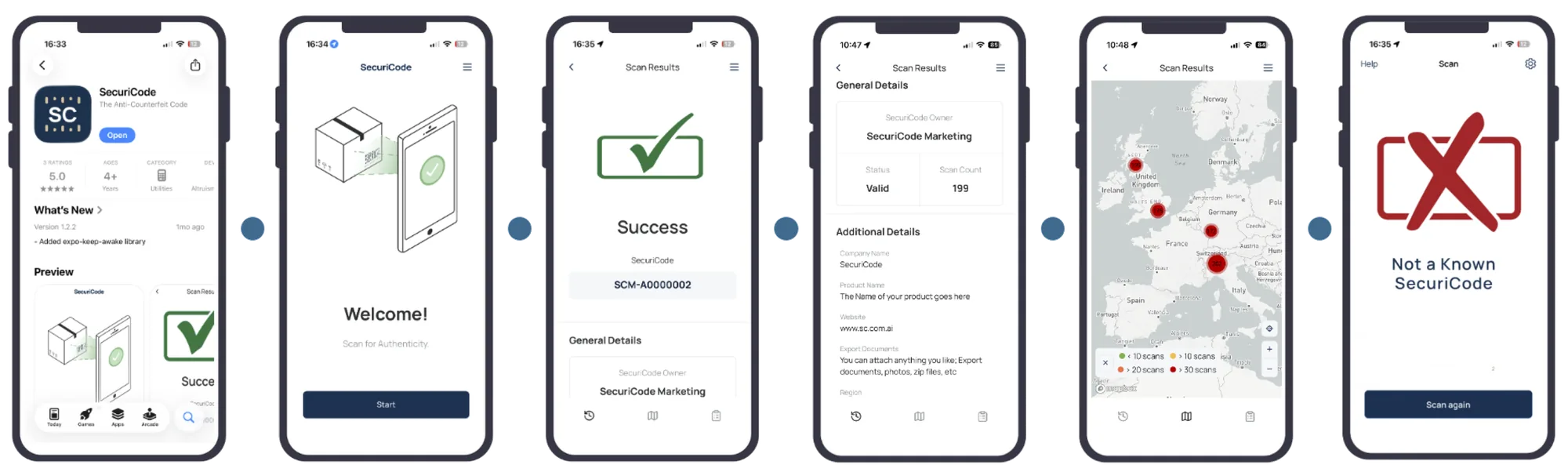
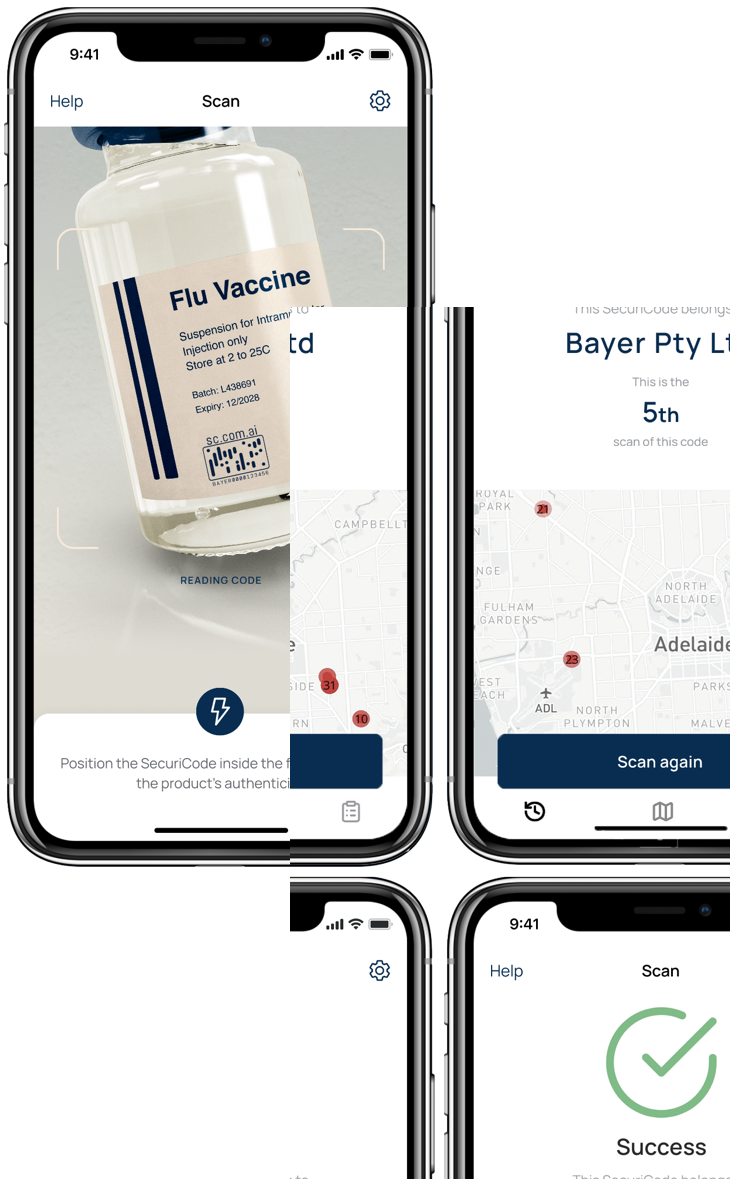
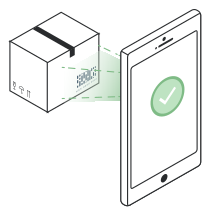
The practical answer is a dual code: an open code for the passport and a secure code for authentication, side by side on the same label or product. The DPP code stays fully standards-based and readable by any phone. The Securicode beside it can only be created by Securicode, is checked in the free Securicode app and logs every scan.
This follows a model regulators already use. Under the EU Falsified Medicines rules, each prescription medicine pack carries an open 2D Data Matrix identifier plus a separate anti-tampering device (Delegated Regulation (EU) 2016/161). The EU Toolbox against counterfeiting, Recommendation (EU) 2024/915, also encourages advanced tracing systems such as the DPP as tools against fakes.
Already in use on apparel care labels
Rudholm Group, a label and DPP supplier that is now part of ITL Group, prints Securicodes onto apparel care labels through its Variable Data Cloud, alongside DPP data. Codes are generated only by Securicode and printed securely by the label supplier, and the factory receives finished labels rather than the codes as a digital file. Read the care label case study.
DPP data carrier and Securicode: different jobs
| DPP data carrier | Securicode | |
|---|---|---|
| Main job | Identify the product and open its passport data | Verify the physical item is genuine |
| Who can create one | Any operator, following open standards | Only Securicode, for approved brands |
| How it is read | Any phone camera or standard scanner, no proprietary app | The free Securicode app |
| If it is copied | The copy opens the genuine passport | The copy is flagged by scan count and location |
| Required by ESPR | Yes, where a delegated act applies | No. An optional authentication layer |
| Typical symbol | GS1 Digital Link QR code or Data Matrix | The Securicode mark, from 1.2mm |
What should brands do now?
Confirm which rules apply
Check if your products fall under the battery passport or an upcoming ESPR act. Many have no DPP date yet.
Choose your DPP route
Most brands will work with a DPP service provider and GS1 identifiers. Keep that decision separate from authentication.
Plan the label once
Redesigning labels for a DPP? Reserve space for an authentication code now, so artwork changes once.
Decide what needs proof
Start authentication with the products that are copied, diverted or high value.
What Securicode does not do
Securicode is not a DPP data carrier, platform or service provider, and it does not make a product DPP compliant. It adds proof that the physical item is genuine.
Frequently asked questions
Is Securicode DPP compliant?
No, and we do not claim to be. ESPR requires the DPP data carrier to follow open standards such as ISO/IEC 15459 and to be readable without a proprietary app. Securicode is checked in the Securicode app, so it cannot act as your DPP data carrier.
What Securicode does is sit beside your compliant DPP code as an authentication layer, so a fake carrying a copied DPP code can be told apart from the real product.
Does a Digital Product Passport stop counterfeits?
Not on its own. The data carrier standard, EN 18220, excludes security features, so a DPP code can be copied onto a fake and still open the genuine passport. A DPP helps most when paired with a way to verify the physical item. Read more.
When will Digital Product Passports be mandatory?
The battery passport applies from 18 February 2027. For other products, dates depend on each ESPR delegated act. The textiles act is expected in the second half of 2027, with obligations at least 18 months later, so mandatory apparel passports are unlikely before 2029.
What is a DPP data carrier?
The physical code on a product that links to its passport, such as a QR code, a Data Matrix or an NFC tag. Under ESPR it must follow open standards. EN 18219 and EN 18220 give a presumption of conformity, and many brands use GS1 Digital Link.
Does adding Securicode change my DPP provider or data?
No. Your DPP code, data model and provider stay as they are. Securicode is printed beside the DPP code and runs separately.
Keep reading
Make every product provable
Apply for access to create Securicodes for your brand, or book a demo and we will show you a live scan.