


Industries: apparel and textiles
Apparel and textiles: a care label that proves the garment is real
Counterfeiters copy swing tags and logos first. A code on the care label, printed by your label supplier and never sent to the factory, stays with the garment for life.
In short
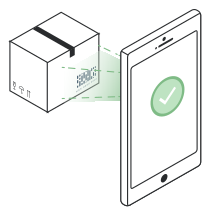
Clothing, footwear and leather goods make up 62% of all counterfeit goods seized at borders (OECD and EUIPO, 2025). Securicode puts a code only your brand can create onto the garment's care label, printed beside the open code that will carry your digital product passport for textiles. Anyone can scan it with the free app, and copied codes show up on your map.
Why is counterfeit clothing so common?
Clothing is easy to copy and easy to ship. The OECD and EUIPO found that clothing, footwear and leather goods were 62% of all seized fakes, and China was the source of 45% of seizures (OECD and EUIPO, 2025). Most seizures now involve small parcels sent straight to buyers.
The cost to genuine brands is large. The EU Intellectual Property Office estimates that counterfeits cost EU clothing makers about €12 billion in sales and around 160,000 jobs a year, based on 2018 to 2021 data (EUIPO, 2024).
Swing tags and logo labels prove nothing, because counterfeiters copy them first. The care label is different. It is sewn in, it stays with the garment for its whole life, and it is already being redesigned to carry digital product passport data.
How does a care label prove a garment is real?
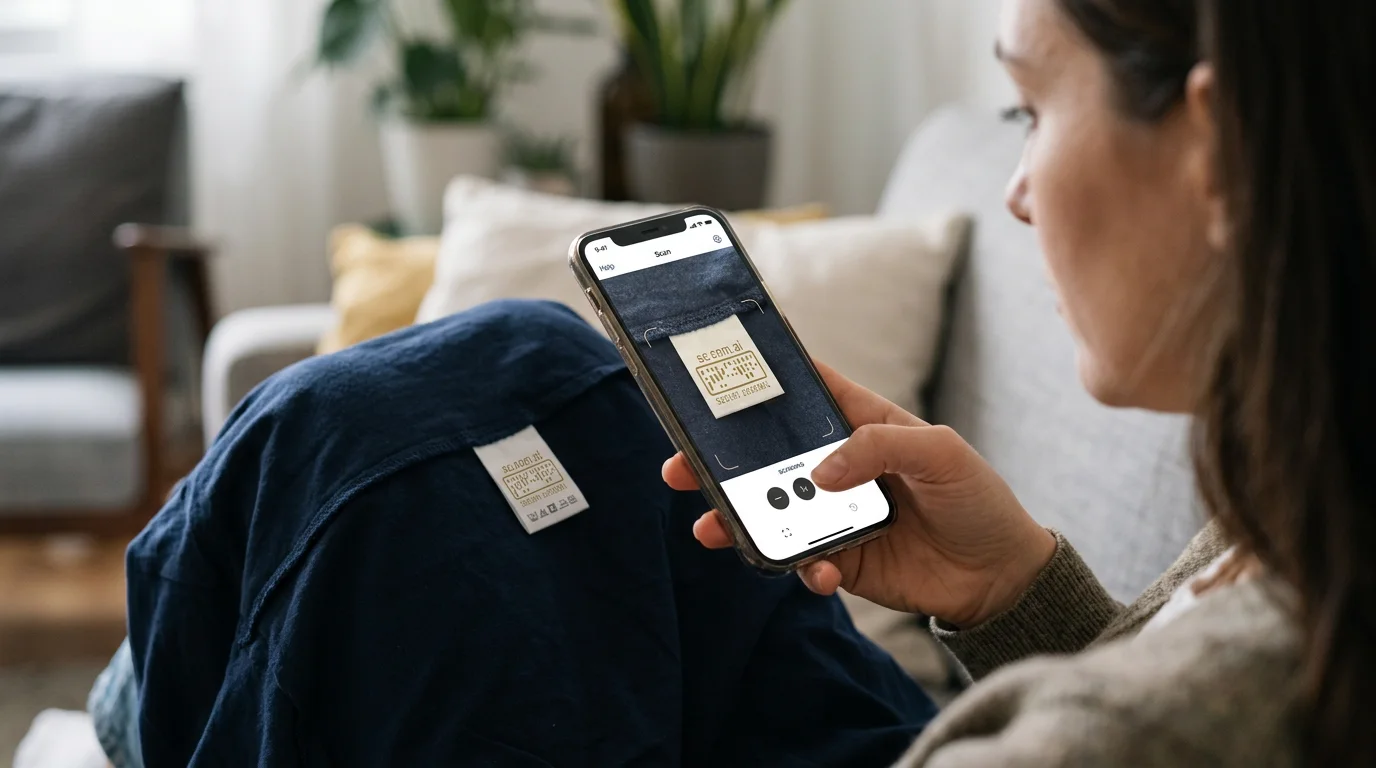
Rudholm Group, an apparel label, packaging and DPP supplier that is now part of ITL Group (about 2,600 staff in 18 countries), prints Securicodes onto care labels through its Variable Data Cloud.
The process keeps codes away from the people most likely to misuse them. Codes are generated only by Securicode and printed securely by the label supplier. The garment factory receives finished physical labels, never the codes as a digital file, so it cannot print extra labels for overruns.
The same label can carry DPP data and batch and lot details, with products linked to the cases and pallets they ship in.
- Printed securely by the label supplier, not the factory
- Checked with any smartphone through the free Securicode app
- Batch and lot traceability, linked to cases and pallets
- Readable down to 3% contrast, so it still scans as the label fades
What do apparel brands need to know about the textile DPP?
The digital product passport for textiles is coming, but later than many brands were told. Here is the current picture.
| Date | What happens | What it means for apparel |
|---|---|---|
| 16 April 2025 | ESPR Working Plan 2025 to 2030 names textiles (apparel) as a priority group | Apparel is in the first wave of product passports |
| 19 July 2026 | Ban on large companies destroying unsold apparel, accessories and footwear applies (ESPR Article 25) | Unsold and returned stock must be handled, not destroyed |
| 20 July 2026 | EU DPP registry operational, according to the Commission | The infrastructure is ready before the textile rules |
| Q3 to Q4 2027 (expected) | Textiles delegated act expected to be adopted | Sets the data, the level (model, batch or item) and the data carrier |
| 2029 or later (our estimate) | Textile DPP obligations apply, at least 18 months after adoption | Time to plan labels once, for DPP and authentication together |
| 19 July 2030 | Destruction ban extends to medium-sized companies | Unsold stock rules reach more brands |
Sources: Regulation (EU) 2024/1781; European Commission; COM(2025) 187. Expected and estimated dates can change. This is general information, not legal advice.
Pressure from both sides of the world
In Europe, the ban on destroying unsold clothing and footwear has applied to large companies since 19 July 2026 (European Commission). Brands need a clearer view of what is unsold, returned and resold, and where it goes.
In the US, the Uyghur Forced Labor Prevention Act has been enforced since June 2022, and goods linked to Xinjiang are presumed to be made with forced labor unless the importer shows otherwise (US Customs and Border Protection). Cotton and apparel importers face growing pressure to show where products were made.
Australian brands selling into the EU will meet the DPP through their European wholesale partners and retailers, some of whom are already asking for product data (Australian Fashion Council). There is no mandatory Australian DPP, but exporters still need to meet the rules of the markets they sell to.
Why a care label code works for apparel
Stays with the garment
Sewn in for the life of the product, through washing, wear and resale.
Sits beside your DPP code
The open DPP code identifies the product. The Securicode beside it proves it is genuine. The artwork changes once.
Shows where production happens
Scans at factories and warehouses show where goods were made and packed, and help expose overruns.
Maps where garments sell
Customer and partner scans show which styles move in which markets.
Flags copies
A copied care label code is flagged when it is scanned too often or in places that garment could not be.
Cents on the dollar
No minimum order, no management fees and no ongoing costs.
How do you add Securicode to your care labels?
- 1
Apply for access
Tell us about your brand, your ranges and where you sell. We vet every applicant before codes are issued.
- 2
Work with your label supplier
Add the code to your care label design with your label supplier or our label partner.
- 3
Labels print with the codes
Codes are printed securely and reach your factory as finished labels, never as digital files.
- 4
Scan and see
Customers, staff and partners scan with the free app, and every scan appears on your map.
Frequently asked questions
Is a digital product passport for textiles mandatory yet?
No. The textiles delegated act is expected in the second half of 2027, and obligations apply at least 18 months after it is adopted, so mandatory apparel passports are unlikely before 2029. The EU ban on large companies destroying unsold apparel already applies from 19 July 2026.
Can Securicode be my textile DPP?
No. A DPP data carrier must follow open standards and be readable without a proprietary app. Securicode sits beside your DPP code as an authentication layer. Read how the two work together.
Can Securicode go on woven labels?
Printed care labels are the proven route today. Ask us about woven labels and other fabric applications for your products, and we will tell you what has been tested.
How can customers tell if clothing is counterfeit?
Prices far below normal, poor stitching and sellers outside authorized channels are warning signs. If the garment carries a Securicode on its care label, scan it with the free app to see whether it is genuine and where else that code has been scanned.
We are an Australian brand. Does the EU DPP affect us?
If you sell into the EU, yes, once the textiles rules apply. Your EU retailers and wholesale partners will need DPP data for the products you supply, so planning labels early saves changing them twice.
Keep reading
Make every product provable
Apply for access to create Securicodes for your brand, or book a demo and we will show you a live scan.