


Solutions: anti-counterfeiting
Anti-counterfeiting solutions that expose every copy
Counterfeiters copy everything they can see. Securicode gives you a mark they cannot create, and a record of every place a copy turns up.
In short
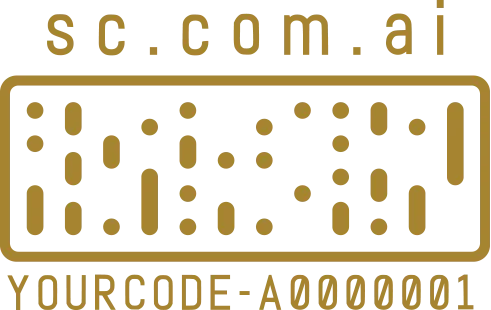
Anti-counterfeiting solutions protect physical products by making genuine items provable and copies visible. Securicode does this with a patented code that only approved brands can create. Anyone can check it with the free app, every scan is logged with its time, date and location, and a copied code exposes itself when it turns up too often or in the wrong place. It works alongside holograms, tamper-evident labels and online brand protection rather than replacing them.
How big is the counterfeiting problem in 2026?
The most reliable global figure comes from the OECD and the EU Intellectual Property Office. Their report Mapping Global Trade in Fakes 2025 puts international trade in counterfeit and pirated goods at about US$467 billion in 2021, up to 2.3% of all world imports. Imports of fakes into the EU alone were worth US$117 billion, or 4.7% of EU imports.
Clothing, footwear and leather goods made up 62% of seized fakes, and about 65% of seizures involved small parcels and mail (OECD, 2025), so fakes increasingly reach customers directly.
Enforcement numbers keep climbing. EU authorities detained about 112 million fake items worth more than €3.8 billion in 2024, a record value (EUIPO, 2025). Australian Border Force seized more than 700,000 counterfeit items worth over A$35 million in 2024/25 (Parliamentary Library, 2025). The damage goes beyond lost sales: about one in three people who unknowingly buy a fake stop buying from that brand (Red Points survey, 2025).
Why do visible security features get copied?
Holograms, color-shifting inks, special labels and QR codes share one weakness: the counterfeiter can see them, so the counterfeiter can study them. A good copy does not need to be perfect. It only needs to fool a customer, a store clerk or a customs officer at a glance.
Open codes are the easiest target. Anyone can generate a QR code for free, and a copied QR code works exactly like the original. Blank NFC and RFID tags can be bought online, and hologram suppliers print to order. None of these features tells you when it has been copied.
How does a closed loop stop counterfeits?
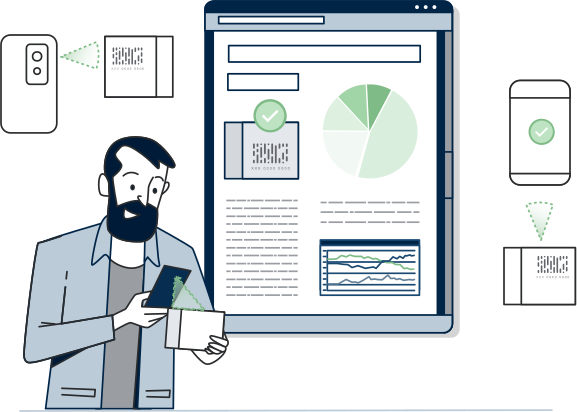
Securicode turns the problem around. Codes are created and issued only by Securicode, and only to brands we have vetted and approved. A made-up code does not verify, because it does not exist in our database. The check happens inside the free Securicode app, so a fake code cannot send your customer to a fake website.
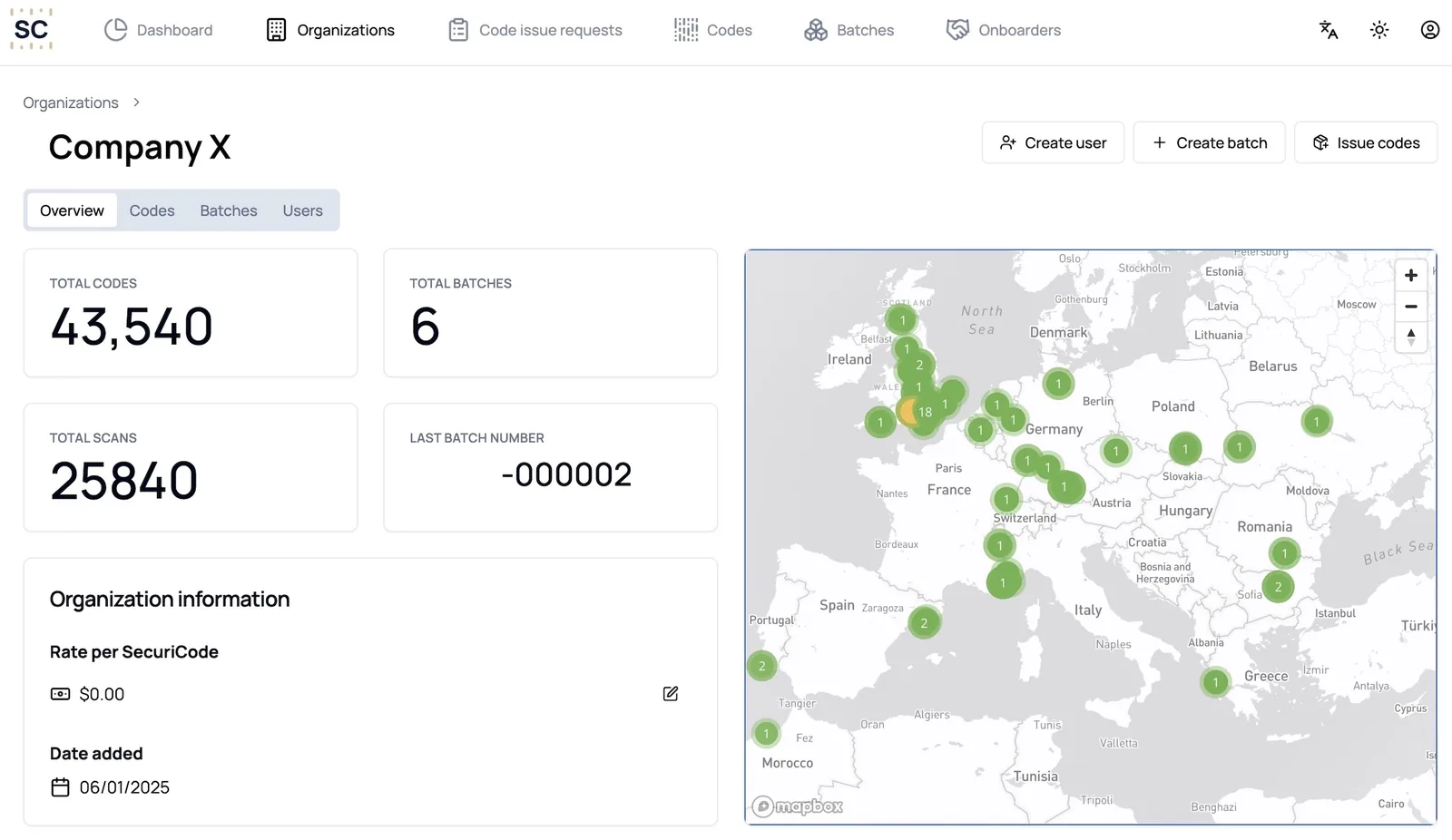
A photocopied code still points to one genuine product. When that code is scanned more often than one product ever would be, or in two cities hours apart, it appears on your dashboard as a likely copy. Counterfeiters cannot create codes that work, and copies expose themselves when scanned somewhere they should not be.
- Patented code design, with global patent protection
- Phone-scannable at 1.2mm, small enough for the product itself
- Copy alerts: each code shows as a map dot that changes color every 10 scans (green, yellow, orange, then red over 30), plus impossible movement detection
- Every scan recorded with time, date and location
Which anti-counterfeit layer does what?
Anti-counterfeit technology falls into four broad layers, and strong programs often combine more than one.
| Layer | Examples | Who can check it | Main weakness | Where Securicode fits |
|---|---|---|---|---|
| Overt (visible) | Holograms, color-shift inks, security labels, tamper-evident seals | Anyone, by eye | Can be studied and copied, with no alert when it is | A visible mark of authenticity, and tamper-evident when printed on destructible labels |
| Covert (hidden) | UV inks, microtext, hidden patterns, taggants | Trained staff with a reader or loupe | Customers cannot check it, and the secret can leak | Not a covert feature, but sits alongside one |
| Forensic | Chemical, DNA or isotopic markers, lab testing | A laboratory | Slow and costly per test, with no customer check | Not forensic. Scan records help you choose what to send to a lab |
| Digital (closed loop) | Serialized codes checked against a secure database, with scan logs | Anyone with a phone | Open QR codes can be cloned freely, and patterns need scans to show | The core layer: issuer-only codes, every scan mapped, copies flagged |
For a vendor-neutral view, read the anti-counterfeit technology comparison or the technology guide.
What can you do when a copy is found?
Finding a fake only helps if you can act on it. Each flagged code gives you something concrete to work with.
See where it surfaced
Every scan of the copied code is on your map with its time, date and location, so you can see which city, which stores and which week the copies started.
Hand records to investigators
Time, date and location records you can hand to investigators and lawyers, so they start from facts. Partners and law enforcement only see your portal if you give them access.
Mark the code as counterfeit
Mark a copied code in your dashboard. Anyone who scans it afterwards sees that it has been flagged, so the copies lose their value on the shelf.
Warn your channel and customers
Tell distributors, marketplaces and customs which products and places are affected. Customers who suspect a fake can use the report a fake form.
Physical and online brand protection are different jobs
Brand protection services that monitor marketplaces, social media and websites find listings and issue takedowns. That work matters, but it cannot tell a customer whether the bottle in their hand is genuine. Securicode protects the physical product. The two are complementary: scan data shows which regions to look at, and your takedown team acts on it.
How do you get started?
No new hardware, no app for your team to build and no subscription.
- 1
Apply for access
Tell us about your brand, your products and where they sell. We vet every applicant before codes are issued, which keeps counterfeiters out of the system.
- 2
Choose where the code goes
Labels, capsules, cartons, care labels or the product itself. We help you pick a placement and size.
- 3
Print or etch your codes
Codes work with the label and printing software most brands already use.
- 4
Watch the scans arrive
Customers, staff and partners scan with the free app. You see every scan on your map, with alerts when a code looks copied.
Frequently asked questions
What is the best anti-counterfeiting solution?
No single feature suits every product. Strong programs combine a visible mark, tamper evidence where it matters and a way for anyone to check a specific item. Securicode provides that last piece: a code only your brand can create, checked with a free app, with every scan logged so copies show up.
What is Anti-counterfeit technology?
Any feature that helps prove a product is genuine or makes a fake easier to detect. It ranges from holograms and UV inks to forensic markers and digital codes checked against a secure database. See the technology comparison.
Can a Securicode be copied?
Any printed mark can be photographed and reprinted. A copied Securicode still points to one genuine product, so when it is scanned too often or somewhere that product could not be, it is flagged on your dashboard with the time, date and location of each scan.
Does Securicode replace holograms or tamper-evident labels?
It does not have to. Many brands keep their existing features and add Securicode as the layer anyone can check. Printed on a destructible label, the code is also tamper-evident.
How much does Securicode cost?
Cents on the dollar. There is no minimum order, no management fees and no ongoing costs, and codes stay live forever, even if you never use us again. See how pricing works.
Keep reading
Make every product provable
Apply for access to create Securicodes for your brand, or book a demo and we will show you a live scan.