


Compare
Anti-counterfeit technology compared: ten options, side by side
QR codes, chips, holograms, covert inks, AI and closed-loop codes. What each one actually proves, what it costs, and where it fits.
In short
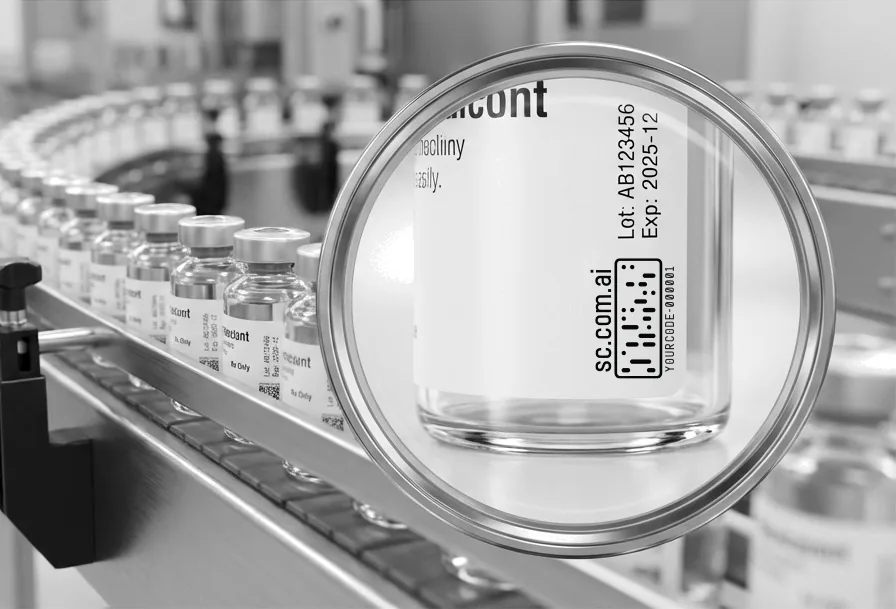
There is no single best anti-counterfeiting solution. The right choice depends on who can create the mark, what happens when it is copied, whether a shopper can check it, and what it costs per unit. Open codes like QR and Data Matrix are cheap but anyone can make them, NFC chips with cryptographic signatures are hard to clone but cost more per unit, and visual features like holograms rely on people spotting a fake. Most brands combine an open code for information with a secure layer for authentication.
How to judge any anti-counterfeit technology
Counterfeit and pirated goods were worth about US$467 billion in international trade in 2021, up to 2.3% of world imports (OECD and EUIPO, 2025). Every technology below responds to that problem with a different trade-off. Seven questions decide whether one actually protects your brand:
- Who can create a working mark? If anyone can, so can a counterfeiter.
- What happens when it is copied? Does the copy work silently, or expose itself?
- Can a shopper check it? Lab-only checks do not help at the point of sale.
- Does checking need an app or a reader? Every extra step means fewer checks.
- Can it sit on the product itself? Packaging is thrown away. Marks on the product survive resale.
- What does each unit cost? This decides whether you protect every item or only a few.
- Are there ongoing fees? Subscriptions add up over a product's life.
The comparison table
General characteristics of each technology. Specific products vary by vendor, specification and volume, so treat this as a starting point for your own questions.
| Technology | Who can create one? | What happens if it is copied? | Can a consumer check it? | Needs an app? | On the product itself? | Typical cost per unit | Ongoing fees |
|---|---|---|---|---|---|---|---|
| Standard QR code | Anyone, free online | The copy works exactly like the original | Scans, but only proves the link works | No, phone camera | Yes, if there is room | Printing cost only | Common for dynamic QR platforms |
| Secure or copy-detection QR | Vendor issues the secure pattern; the QR part is open | A photocopy can be detected, often on the first scan | Yes | Usually no, browser based | Needs controlled, high quality printing | Low, plus platform | Platform fees usual |
| Serialized barcode or Data Matrix | Anyone with a generator; serials can be guessed if sequential | Copy reads normally; duplicates only seen if the system checks | Rarely; usually trade or pharmacy checks | Scanner or trade app | Yes, including direct part marking | Printing cost only | Serialization software |
| NFC tag | Anyone can buy blank tags | Basic tags can be cloned; cryptographic tags are hard to clone | Yes, tap with most phones | Often no for web-based tags | Needs an embedded tag or inlay | Higher than a printed code; varies by chip and volume | Platform fees common |
| RFID tag (UHF) | Anyone can buy blank tags | Basic tags can be cloned with the right equipment | No, phones cannot read UHF | Needs a dedicated reader | Needs a tag, inlay or hang tag | Tag plus reader infrastructure | Readers and software |
| Hologram | Any capable producer; generic ones sold online | Lookalikes pass a quick glance; no record | By eye only | No | As a sticker or foil | Low at volume | None |
| Covert inks and taggants | Specialist suppliers | Hard to copy without the formula | No, needs a light, reader or lab | Special reader or lab test | Yes, in ink, label or material | Varies widely | Reader and testing costs |
| AI image recognition | Nothing applied; uses the product's own features | Close fakes can be hard to separate | Through an app or paid service | Yes, usually | Nothing to add | Per check or subscription | Subscription common |
| Blockchain certificate | Anyone can create a token | The record cannot be altered, but it says nothing about the item unless tied to a secure mark | Through an app, wallet or web page | Often | Needs a QR or NFC carrier | Platform pricing | Platform fees usual |
| Securicode (closed-loop code) | Only Securicode, and only for vetted brands | The copy still points to one product and is flagged by scan count and movement | Yes, free app | Yes, the free Securicode app | Yes, printed, etched or woven from 1.2mm | Cents on the dollar, no minimum order | None |
Cost descriptions are general and change with volume, specification and vendor. For Securicode pricing see how pricing works.
Cheap, universal, easy to copy
Open codes: QR, Data Matrix and serialized barcodes
QR codes and Data Matrix codes are open standards. That is their strength: any phone or scanner reads them, they cost almost nothing to print, and they carry product information well. It is also their weakness for authentication. Anyone can generate a QR code for free, and a photocopied code works exactly like the original.
Serialization helps. When every item has its own number and a database checks it, duplicates can be spotted, which is how European medicine safety features work. But pharmacies or the trade do the checking, not shoppers.
Secure QR codes add a copy-detection pattern that degrades when photocopied, so a copy can be caught on its first scan, something scan-history systems like Securicode cannot do. Printing must be tightly controlled. See Securicode vs QR codes.
Strong when cryptographic, but a cost per tag
Chips: NFC and RFID
NFC and RFID tags carry a small chip and antenna. Basic tags store an ID or link that can be cloned with the right equipment. NFC chips with cryptographic signatures produce a fresh, signed response on every tap, which is very hard to fake. They are among the strongest consumer-checkable options.
The trade-offs are cost per unit, size and placement: a chip must be embedded in a label, cap or inlay. UHF RFID is excellent for stocktakes but phones cannot read it. See Securicode vs NFC and RFID.
Visual, covert and digital-only options
Holograms
A low-cost visible deterrent. But generic holograms are sold online, lookalikes pass a glance, and nothing records where a fake turned up.
Covert inks and taggants
Hidden markers that are hard to copy. Useful for investigators and customs, but shoppers cannot check them.
AI image recognition
Analyzes the product itself, so nothing is added. Accuracy depends on the model, usually via an app or paid service.
Blockchain certificates
A record that cannot be changed, but a certificate can be attached to a fake. It needs a secure mark on the product.
Digital Product Passports
A DPP describes a product using an open code anyone can copy. See authentication alongside a DPP.
Closed-loop codes
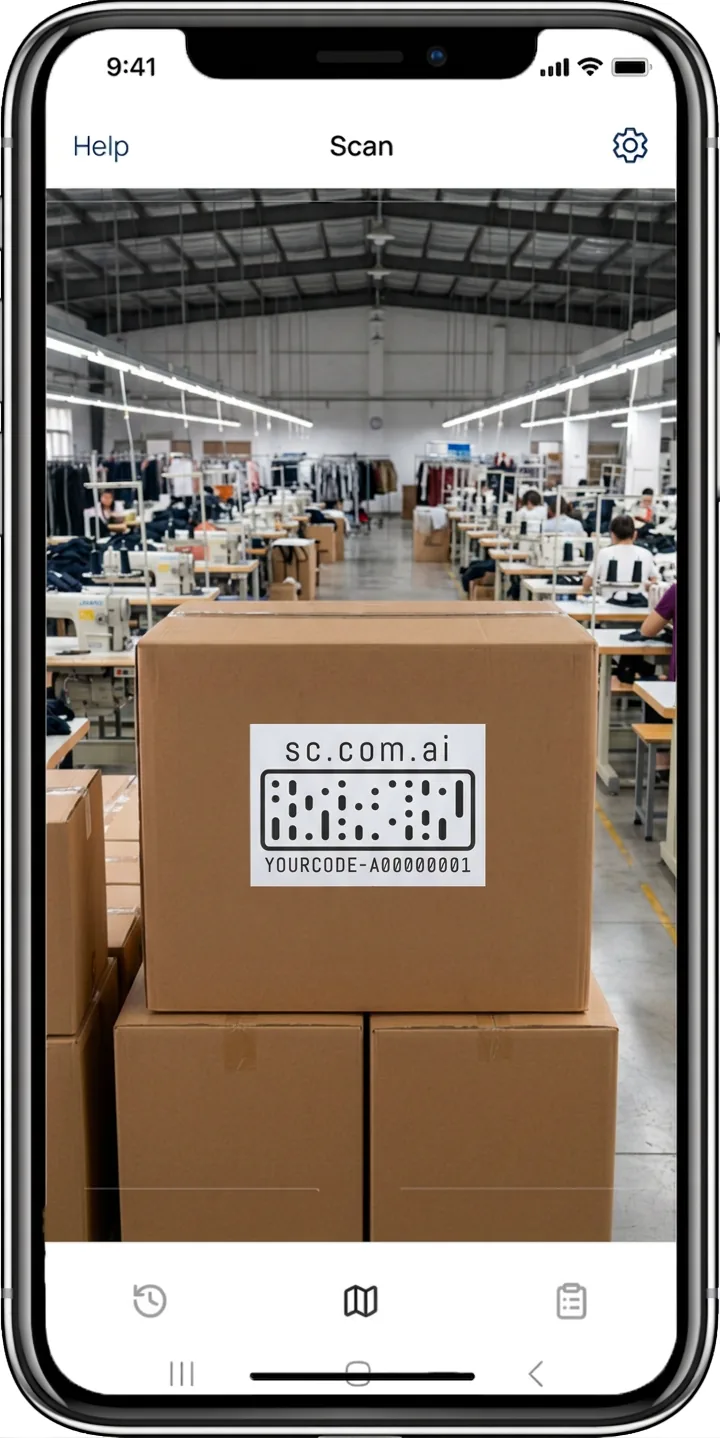
Only the issuer can create working codes, and each scan is logged. How closed-loop authentication works.
Where Securicode fits, and where it does not
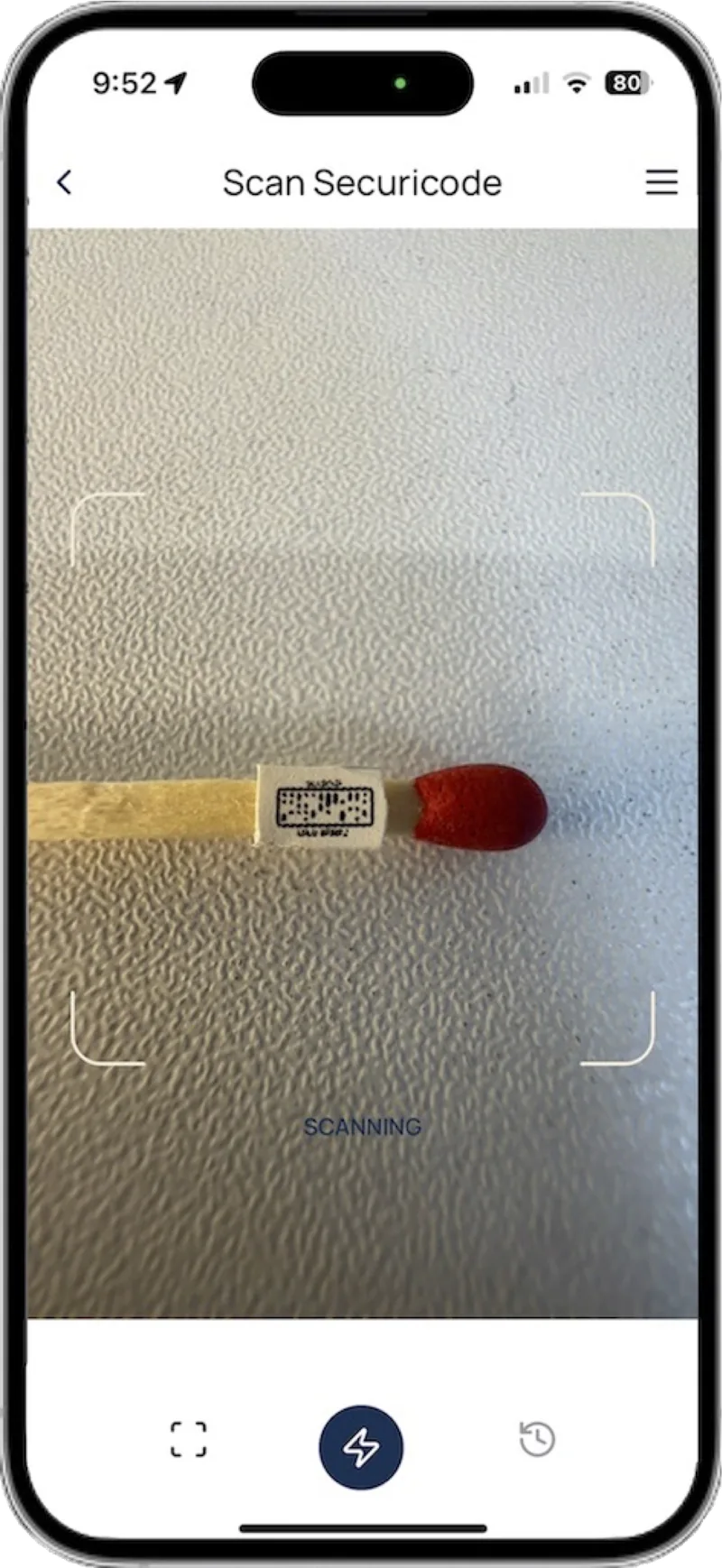
Securicode codes are created only by Securicode and issued only to vetted brands, so a made-up code does not verify. A copied code still points to one genuine product, so when it is scanned too often, or in two places it could not be at once, it shows up on the brand's dashboard. Phone-scannable at 1.2mm and readable down to 3% contrast, it can sit on the product itself. To be fair about the limits:
- It needs the free Securicode app. Keeping the check inside the app means a fake code cannot send people to a fake website. The cost is friction.
- The first scan of a copy can look genuine. Detection comes from scan history and movement. Secure QR copy detection catches some photocopies sooner.
- It is not a Digital Product Passport carrier. A DPP must use open standards. Securicode sits beside it as the authentication layer.
What is the best anti-counterfeiting solution for your goal?
Match the technology to the job. Many brands use two layers.
| Your main goal | Strong options | Why |
|---|---|---|
| Let shoppers check a product before they buy | Securicode, secure QR, cryptographic NFC | Each gives a consumer a direct check on a phone |
| Mark very small items or the product itself | Securicode, direct part marked Data Matrix | Printed or etched marks fit where tags cannot |
| Fast stocktakes and logistics | UHF RFID | Reads many items at once without line of sight |
| Meet a Digital Product Passport requirement | GS1 Digital Link QR or Data Matrix, plus an authentication layer | The DPP needs an open carrier; authentication is separate |
| Support investigators and customs | Covert taggants, Securicode scan records | Hidden markers and time, date and location records |
| Find gray market and diverted stock | Securicode, serialized codes with aggregation | Item, case and pallet links show where stock surfaced |
Frequently asked questions
What is anti-counterfeit technology?
Anti-counterfeit technology is any mark, device or system that helps prove a product is genuine or exposes a fake. It ranges from visible features like holograms to codes, chips, covert inks and software that analyzes scans or images.
What is the best anti-counterfeiting solution?
There is no single best option. The best choice depends on whether shoppers need to check products, how small the item is, your cost per unit and whether you also need logistics tracking. Many brands combine an open code for information with a secure layer for authentication.
Can NFC tags be cloned?
Basic NFC tags that store a fixed ID or link can be cloned. NFC chips that produce a cryptographic signature on every tap are very hard to clone, which makes them one of the stronger options, at a higher cost per unit than a printed code.
Are holograms still effective against counterfeits?
Holograms deter casual copying, but generic holograms are sold online and most people cannot tell a good lookalike from the original. They also leave no record of where a fake appeared.
Why does Securicode need an app?
Verification happens inside the free Securicode app so the check always goes to Securicode's database. A fake code cannot redirect people to a fake website. The trade-off is that shoppers need to download the app once. How scanning works.
Keep reading
Make every product provable
Apply for access to create Securicodes for your brand, or book a demo and we will show you a live scan.