


Industries: supplements and pharma
Supplements and pharmaceuticals: authentication alongside your GS1 barcode
Serialization lets the supply chain trace your packs. Securicode lets the person holding the pack check it is genuine before they use it.
In short
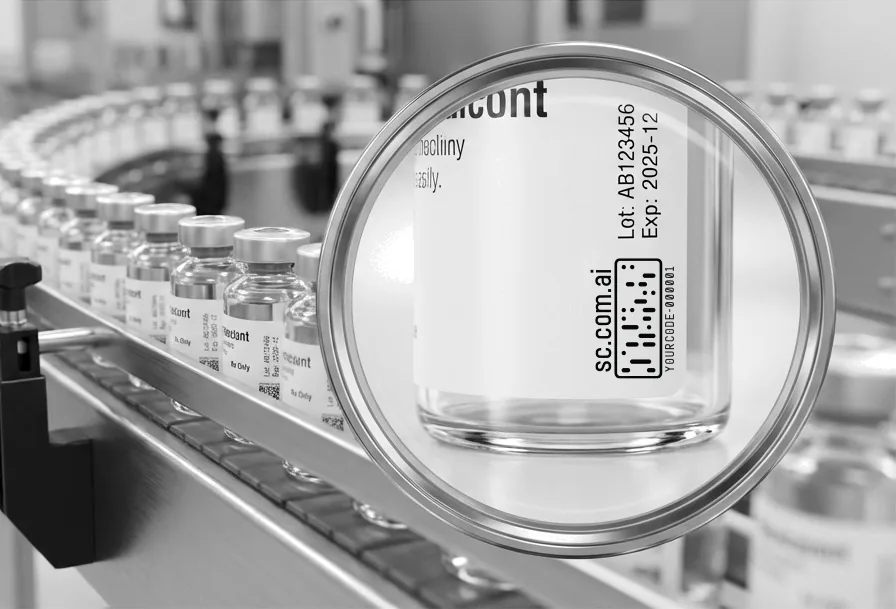
Pharmaceutical serialization gives each pack a GS1 identifier so the supply chain and regulators can trace it, under rules such as the US Drug Supply Chain Security Act (DSCSA) and the EU Falsified Medicines Directive (FMD). It was not designed for patients to check. Securicode adds a consumer-checkable authentication layer beside your GS1 barcode: a code only your brand can create, checked with a free app, with every scan mapped so copied codes show up.
How common are counterfeit medicines and fake supplements?
The World Health Organization estimated that about 1 in 10 medical products in low and middle income countries is substandard or falsified. It remains the most cited global figure, although it dates from 2017 (WHO, 2017).
Recent enforcement shows the problem is close to home. In INTERPOL's Operation Pangea XVIII, run across 90 countries in March 2026, authorities seized 6.42 million doses of illicit medicines worth US$15.5 million. Australia ranked third by doses seized, with 752,617, including significant peptide seizures (INTERPOL, 2026). The TGA reports that more than 12 million unlawfully imported therapeutic goods were seized and destroyed in 2024/25 (TGA, 2026).
Supplements are exposed too. Fake versions of leading Australian vitamin brands have been seized in Chinese crackdowns (NutraIngredients, 2018), and many supplement brands sell through the same online and cross-border channels that counterfeiters use.
What fake medicines cost, in money and in lives
Counterfeit and substandard medicines are estimated to be a market worth up to US$431 billion a year (WHO, cited in Gurney, Amundson and Boumediene, 2017).
The human cost is far higher. Doctors have warned that fake drugs kill more than 250,000 children a year (The Guardian, 2019), and the WHO estimates that 1 in 10 medical products in developing countries is substandard or falsified (World Health Organization, 2017).
Counterfeit GLP-1 pens reached the legitimate supply chain
Weight loss and diabetes medicines are a prime target. The TGA has issued alerts on counterfeit Ozempic pens found to contain insulin, and on fake semaglutide vials. In the US, Novo Nordisk told the FDA in November 2025 that counterfeit Ozempic 1mg had been found in the legitimate US drug supply chain, not only on rogue websites (FDA, updated December 2025).
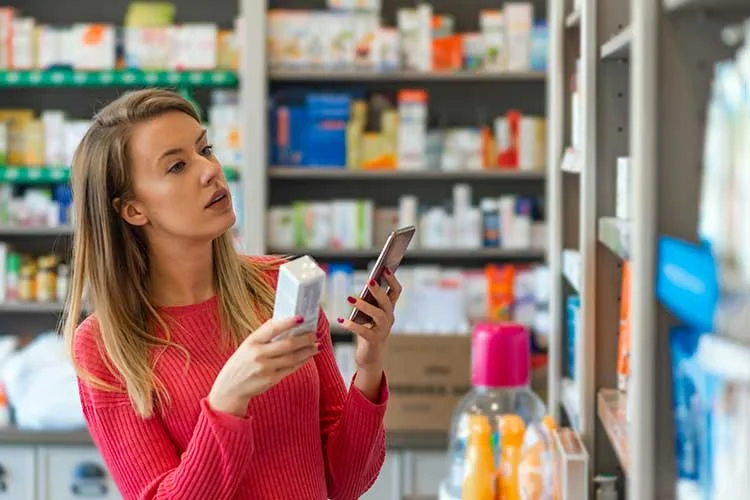
That is the scenario every QA and regulatory team fears: a fake that moves through licensed channels and reaches a patient who did everything right. Serialization helps the supply chain trace packs. It does not give the patient holding the pen a simple way to check it.
Serialization and authentication: what is the difference?
| GS1 serialization (DSCSA, EU FMD) | Securicode authentication | |
|---|---|---|
| Purpose | Identify and trace each pack through the supply chain | Let anyone check that a pack is genuine |
| Who checks it | Manufacturers, wholesalers, pharmacies and regulators | Patients, customers, staff and partners with a phone |
| Code type | Open GS1 2D Data Matrix | Issuer-only Securicode, checked in a free app |
| If the code is copied | Checked against national systems at points such as dispensing, depending on the market | Flagged by scan count and impossible movement |
| Required by law | Yes, for prescription medicines in the US, EU and other markets | No. An optional extra layer |
| Typical use | Prescription medicines | Supplements, over the counter products, devices, export packs and high risk lines |
US DSCSA enhanced requirements have applied since 27 November 2023, and the small dispenser exemption now runs to 27 November 2027 (FDA). EU FMD safety features, a unique identifier plus an anti-tampering device, have applied since 9 February 2019 (Delegated Regulation (EU) 2016/161).
“Every single one of these cartridges that we make now has its own Securicode on it... the customer then can have great confidence that the product they are injecting into themselves is in fact VAION's product and not a knockoff.”
How VAION+ protects its NAD+ injection pens
VAION+ is a UK brand that sells NAD+ injection pens. Every cartridge it makes now carries its own Securicode, small enough to fit into the pen without getting in the way.
The brand had dealt with knock-offs on two separate occasions before it started using Securicode. Now customers scan the cartridge before they inject. They can match the GMP certificates VAION+ holds for product quality to the product in their hands, and VAION+ can see where its products are scanned around the world.
What QA and regulatory teams ask us
Does it fit our GMP process?
Codes are supplied to your printer or label converter and applied in your normal packaging run. We work with your validation team on the documentation they need.
Can we attach certificates and batch data?
Yes. The page a customer sees after a successful scan can include documents, links and images, such as a batch certificate, and you can update it without reprinting.
Can we flag a problem batch?
Brands can flag a batch so anyone who scans it sees a recall notice. It supports, and never replaces, your formal recall procedure with the TGA or other regulators.
What data does the app collect?
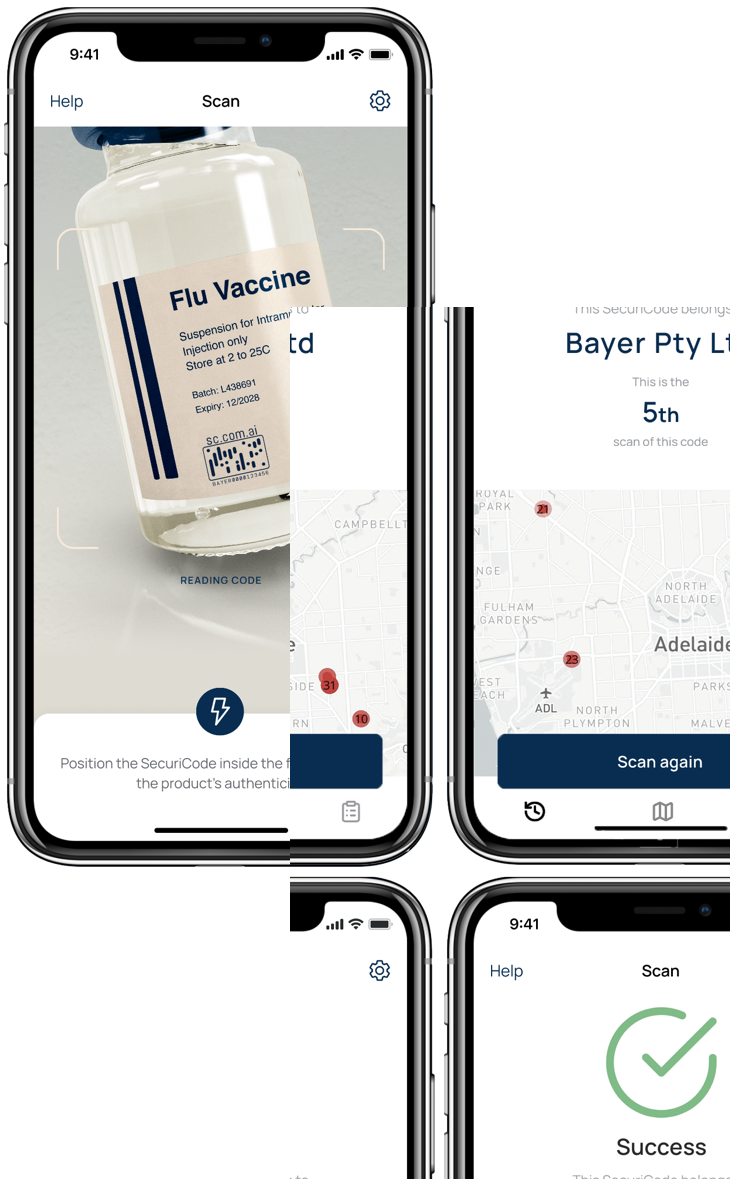
The app collects zero personal data and does not ask for an account, name or email. Each anonymous scan records the time, date and location, which is how fakes are detected, and scan data is encrypted. See our security page.
Securicode does not replace regulatory serialization
If your products fall under DSCSA, EU FMD or TGA Unique Device Identification, you still need GS1-based serialization and identifiers. Securicode is an extra authentication layer, not a compliance system for those rules.
Frequently asked questions
What is pharmaceutical serialization?
Giving each saleable pack a unique identifier, usually a GS1 2D Data Matrix holding a product code, serial number, batch and expiry date, so it can be traced and checked through the supply chain. It is required for prescription medicines in the US (DSCSA), the EU (FMD) and other markets.
Is Securicode a replacement for DSCSA or FMD serialization?
No. Keep your GS1 serialization for regulatory compliance. Securicode sits beside it as a check that patients, customers and your own staff can do with a phone.
How can I tell if supplements are fake?
Buy from authorized sellers, check seals, packaging and batch details, and be wary of prices far below normal. If the brand uses Securicode, scan the code with the free app to see whether it is genuine and where else it has been scanned. Report suspected fakes to the brand and, in Australia, to the TGA.
Can patients check a product without an account?
Yes. The free app does not ask for an account, name or email. A scan shows whether the code is genuine, the product it belongs to and where it has been scanned before.
Does Securicode fit on small packs, vials and pens?
Yes. At 1.2mm, codes fit on vial labels and pen cartridges as well as cartons and bottles.
Keep reading
Make every product provable
Apply for access to create Securicodes for your brand, or book a demo and we will show you a live scan.