


How it works
Printing and application: Anti-counterfeit labels, etching and more
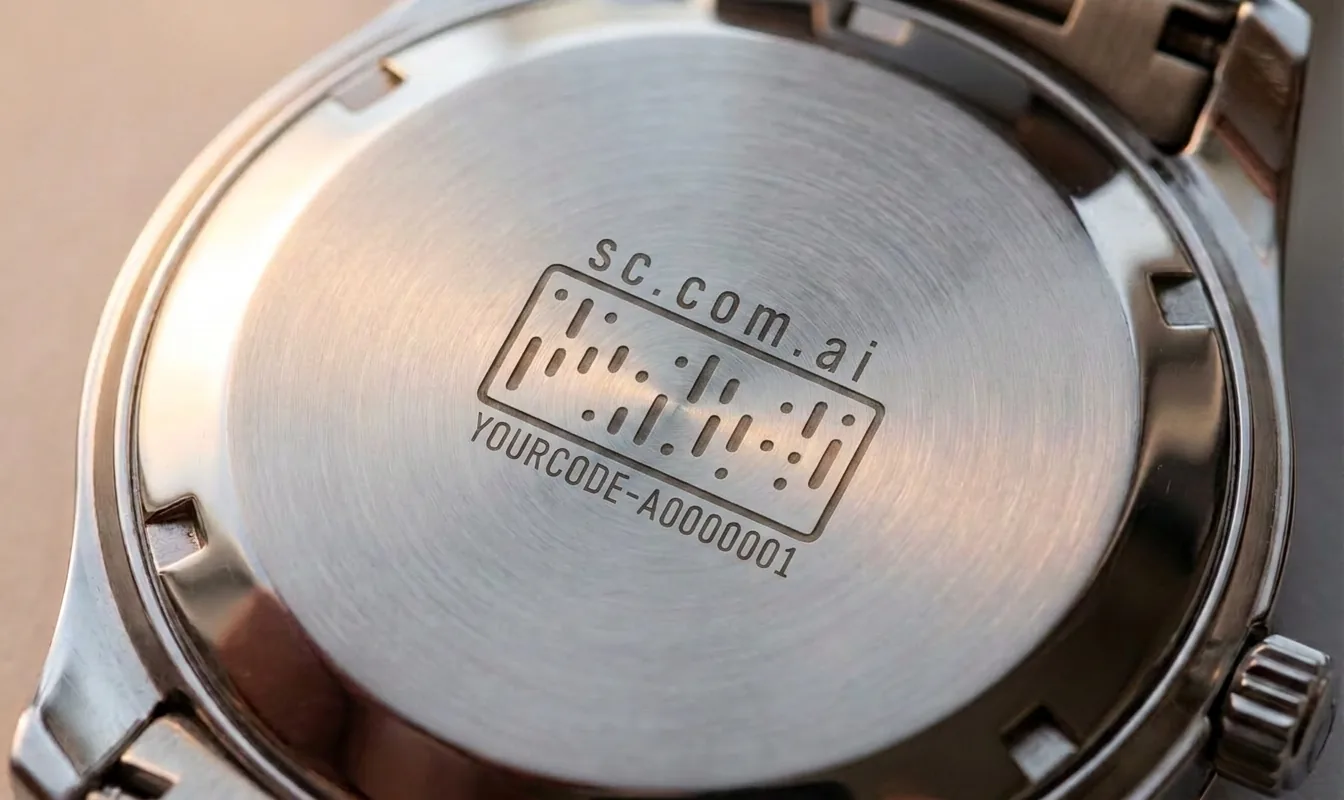
Printed, laser-etched, woven or embossed. At 1.2mm and readable down to 3% contrast, a Securicode fits where other codes cannot.
In short
Securicodes can be printed on labels and packs, laser-etched on glass and metal, woven into fabric or embossed, from 1.2mm and down to 3% contrast. Codes are supplied to you or your label printer and work with common design and printing software. Printed on a destructible label, a Securicode is tamper-evident, because the label tears if someone tries to remove it.
Which surfaces can carry a Securicode?
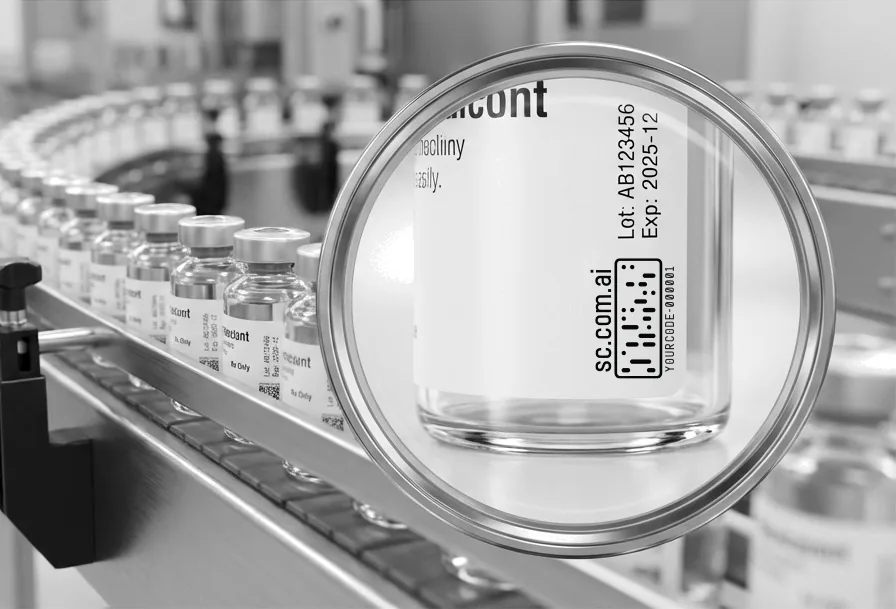
A Securicode is a printed or marked pattern, so it can go wherever your current marking goes. Brands put it on the product itself, on primary packaging and on outer cases.
- Glass: bottles, vials and jars, printed or laser-etched
- Metal: watch backs, closures and hardware, laser-etched
- Leather: embossed or printed on tags and linings
- Fabric: woven or printed on care labels
- Paper and board: labels, cartons and cases
- Plastic: caps, capsules, pens and blister packs
Which application method should you use?
The right method depends on the product, the material and your production line. Here is where each one fits.
| Method | Best for | Points to check |
|---|---|---|
| Printed label | Bottles, jars, cartons and supplement packs | Print quality and contrast against the background |
| Printed directly on the pack | Cartons, pouches and blister packs | Surface finish and ink adhesion |
| Laser-etched | Glass, metal, watch backs and closures | Etch depth and contrast on the material |
| Woven | Garment labels and textiles | Weave density at small sizes |
| Embossed | Leather goods and some packaging | Depth, and how light falls when scanned |
| On capsules and closures | Wine and spirits | Placement so the code stays readable, or breaks on opening |
| Care labels | Apparel and textiles | Durability through washing and fading |
| Destructible tamper-evident sticker | Any product where removal must be visible | Security cuts so the label tears if lifted |
How small and how faint can a Securicode be?
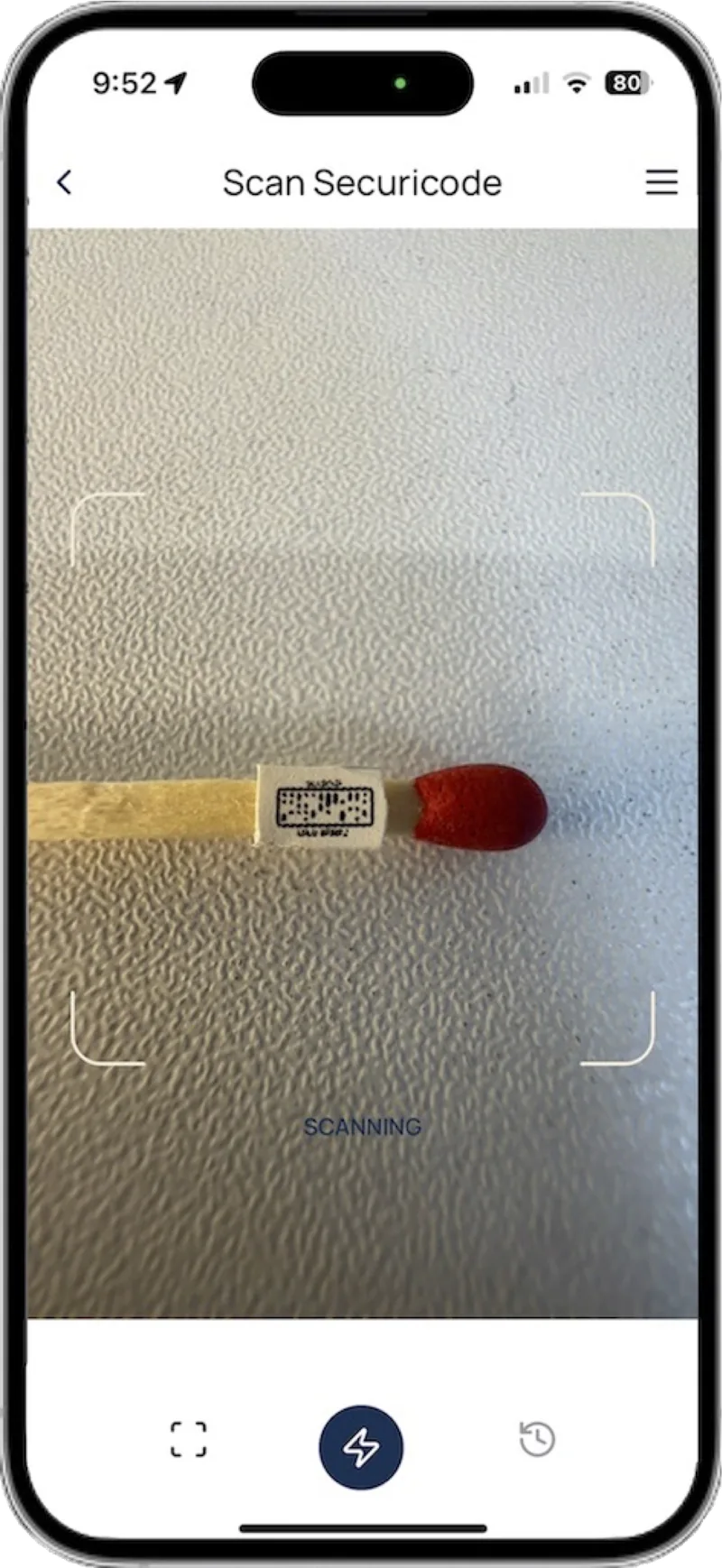
An ordinary phone can scan a Securicode at 1.2mm. That is small enough for a bottle neck, a match head, a vial or the back of a watch, so you rarely need to change your packaging to fit it.
It also reads at low contrast, down to 3% contrast. In practice that means codes can still scan on faded fabric, tone-on-tone printing and etched metal, where a standard barcode would struggle.
We guide you on size and placement before production. Always test-scan samples on ordinary phones, in normal light, before a full run.
Which software and printers work with Securicode?
Codes are supplied as files that drop into the tools printers already use. Compatible software includes Adobe, CorelDRAW, BarTender, Markem-Imaje and Videojet, among others.
You do not need to change label suppliers. Codes can be sent to you or straight to your printer. Sending them straight to the printer keeps code files out of general circulation, and some print partners go further by keeping digital codes away from the factory, so the factory only ever receives finished labels.
For apparel, codes can be printed into care labels by a variable data printing partner, so each garment gets a unique code in the normal label run. See how it works for care labels.
Tamper evidence
How do you make a Securicode tamper-evident?
A code on its own shows whether a product is genuine. Where you place it decides whether it also shows tampering.
Destructible labels
Print the code on a sticker with security cuts. If someone tries to lift it, the label tears and the damage is plain to see. Tamper-evident when printed on destructible labels.
Across the closure
Place the code across the cap, cork or seal so it breaks when the bottle is opened. A bottle that has been opened and refilled shows a broken code.
On the capsule
For wine and spirits, a code on the capsule stays readable for the customer and makes refilling harder to hide, at the point of sale or later.
From code file to finished product
- 1
Choose where the code goes
Pick the surface, size and method with our guidance, based on your packaging and production line.
- 2
Receive your codes
Codes are sent to you or your label printer, in batches matched to your production runs.
- 3
Test print and scan
Run samples and scan them with the app on ordinary phones, in normal light.
- 4
Run production
Print, etch or weave as part of your normal run. Link items to cases and pallets if you use parent and child codes.
Frequently asked questions
What are Anti-counterfeit labels?
Anti-counterfeit labels carry a feature that helps prove a product is genuine. A Securicode label carries a unique code that only verifies against the Securicode database, and every scan of it is recorded.
Are Securicode labels tamper evident?
They are tamper-evident when printed on destructible labels, which tear if someone tries to remove them, or when placed across a closure so the code breaks on opening.
How is Securicode different from other security labels?
Many security labels rely on features that are hard to reproduce, such as holograms or special inks. A capable printer can still copy them, and nothing tells you when they do. A Securicode can sit on a security label and add a unique code customers can check, plus a scan record for you.
What size does a Securicode need to be?
An ordinary phone can scan it from 1.2mm. We will help you choose the right size for your material and printing method.
Do I need to change my label printer?
No. Codes work with common design and printing software, and can be sent to you or directly to your current printer.
Can a Securicode go on fabric that gets washed?
Yes. Codes can be woven or printed on care labels and read down to 3% contrast, which helps them scan after fading. Test your label material before a full run.
Keep reading
Make every product provable
Apply for access to create Securicodes for your brand, or book a demo and we will show you a live scan.