


How it works
The closed-loop Anti-counterfeit code, explained
Counterfeiters cannot create codes that work, and copies expose themselves when scanned somewhere they should not be. Here is how the loop stays closed.
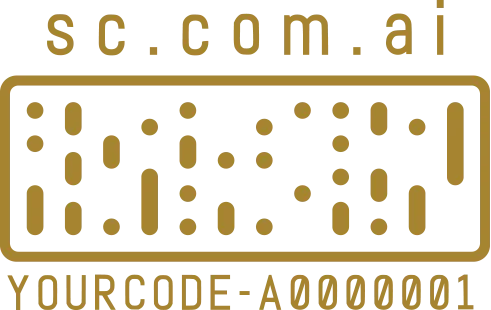
In short
A closed-loop Anti-counterfeit code is one that only its issuer can create and only its issuer's system can verify. Securicode issues random, unique codes only to vetted brands, and the free app checks each one against the Securicode database, never an outside website. A made-up code does not scan, and a copied code still points to one product, so it is flagged when it is scanned too often or in places too far apart.
The core idea
What does closed loop mean?
Most product codes are open. A QR code, a barcode or a Data Matrix code follows a public standard, so anyone with free software can create one. That openness is useful for sharing product information. It is also why counterfeiters copy those codes so easily.
A closed loop adds three controls that an open code does not have:
- Who can create a working code: only Securicode, and only for brands we have vetted and approved.
- Where a code is checked: only in the Securicode app, against the Securicode database.
- What happens on every scan: the time, date and location are recorded, so unusual patterns show up.
Remove any one of those controls and you have an ordinary code. Keep all three and a counterfeiter has no way to make a code that verifies.
Inside the loop
How does a code move through the loop?
- 1
Vetting
A brand applies, and we check who they are before any code is issued. Brands that misuse the system lose access.
- 2
Generation
Each code is random and unique, drawn from more than a quadrillion possible combinations. The database only holds codes that have actually been issued, not every possible combination, so a guess has nothing to match.
- 3
Delivery
Codes are sent to the brand or its label printer for production. Once delivered, they are removed from Securicode's systems, so there is no stored batch to steal from us.
- 4
Scanning
A customer scans with the free app. The scan goes to the Securicode database, which confirms the code exists and shows the product it belongs to.
- 5
Recording
Each scan is logged with its time, date and location. That history is what exposes copies and gives your team a record to act on.
Open codes vs closed-loop codes
QR codes and barcodes do an excellent job of identifying products. They were never designed to prove a product is genuine. Here is the difference in practice.
| Open codes (QR, barcodes) | Closed-loop Securicode | |
|---|---|---|
| Who can create a code that works? | Anyone, with free software | Only Securicode, for vetted brands |
| Where does a scan go? | Wherever the code points, including a fake website | Always to the Securicode database |
| What if someone makes up a code? | It works like any other | It does not scan |
| What if a code is copied? | The copy works exactly like the original, unseen | The copy points to one product and is flagged by scan count and location |
| Is each scan recorded? | Only if the brand adds tracking | Yes, with time, date and location |
| Best used for | Product information, links and Digital Product Passport data | Authentication, alongside your existing codes |
Securicode does not replace your barcode or DPP code. It sits beside them. See Securicode vs QR codes for more detail.
What happens when someone copies a code?
Any printed mark can be photographed and reprinted. The real question is what a copy achieves. Because every Securicode is unique, a copied code still points to one genuine product. The more it is reused, the more obvious it becomes.
Securicode watches for two patterns, and each one turns a copy into evidence:
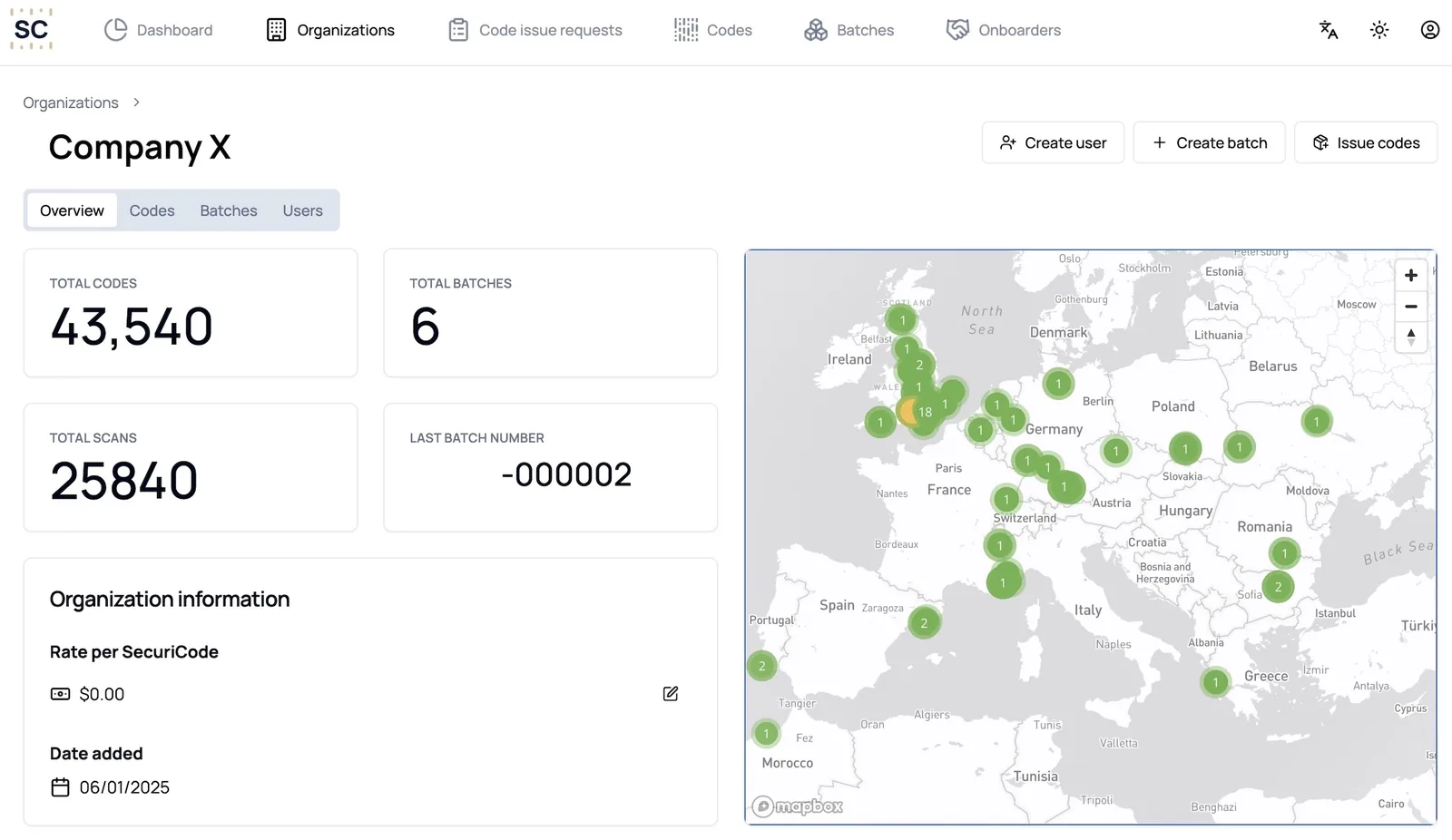
- Scan count. One product is only scanned so many times. Each code shows on your dashboard as a map dot that changes color every 10 scans (green, yellow, orange, then red over 30), so a code scanned far more than one product ever would be stands out.
- Impossible movement. The same code scanned in places too far apart in too short a time. One bottle cannot be in two cities an hour apart.
Thinking like a counterfeiter
What can a counterfeiter try, and what happens?
Make up a code
It will not scan. With more than a quadrillion possible combinations and only issued codes in the database, a guessed code has no match.
Copy one code
The copy keeps pointing to the original product. Repeated scans, and scans in the wrong places, flag it on your map.
Copy a batch by hand
Every code has to be photographed, cleaned up and reprinted. The copies first surface from one place, which shows where and when the copying began.
Steal the code files
Codes go straight to the brand or its printer, and Securicode removes them from its systems after delivery. A trusted label printer can also keep code files away from the factory floor.
Why is Securicode not built on blockchain?
Blockchain is good at one thing: keeping a record that cannot be quietly changed. It cannot tell you whether the physical item in your hand is the one that record describes. Anyone can attach a blockchain record to a counterfeit.
So Securicode verifies the physical code first. Once a scan has confirmed the code is genuine and has not been duplicated, a brand can attach a blockchain record or a digital certificate to the result if it wants one. The order matters: authenticate the object, then add the record.
Criminals can get access to blockchain. They cannot create a Securicode that works.
Does Securicode replace my barcode or DPP code?
No. Your barcode, GS1 Digital Link QR code or Digital Product Passport carrier stays exactly as it is, because those must use open standards. Securicode works alongside them as the authentication layer. See how it fits with a DPP.
Frequently asked questions
What is an Anti-counterfeit code?
An Anti-counterfeit code is a mark on a product that helps prove it is genuine. Securicode's version is closed loop: only Securicode issues codes, only to vetted brands, and each code only verifies against the Securicode database.
Can someone generate their own Securicode?
They can print something that looks like one, but it will not scan. Codes are random and unique, and only codes Securicode has issued exist in the database.
What is impossible movement?
It is when the same code is scanned in two places too far apart for one product to travel between them in the time available. It is a strong sign the code has been copied.
Where are codes kept after they are made?
They are sent to the brand or its label printer for production. Securicode then removes them from its systems, so there is no stored batch to steal from us.
Is a Securicode a type of QR code?
No. A QR code is an open format anyone can create. A Securicode uses a patented code design, is only issued by Securicode, and is only checked in the Securicode app.
Keep reading
Make every product provable
Apply for access to create Securicodes for your brand, or book a demo and we will show you a live scan.