


Solutions: gray market
Detect gray market goods and parallel imports
Diverted stock is genuine, which is why it is so hard to see. Securicode shows where every coded product is scanned, and which shipment it came from.
In short
Gray market goods are genuine products sold outside the channels or countries the brand intended, usually through parallel imports. Securicode logs where every coded product is scanned, so stock that surfaces in the wrong country stands out on your map. Because each item code is linked to its case and pallet, you can trace diverted goods back to the shipment, and usually the distributor, they came from.
What are parallel imports and gray market goods?
A parallel import is a genuine product bought in one market and resold in another without the brand owner's approval. The goods are real. What is wrong is the route: they bypass the authorized distributor, the agreed pricing and often the local labeling and warranty rules.
Product diversion is the wider pattern behind it. Stock sold to one distributor, at a price set for one market, is quietly moved into another where it sells for more. The result is gray market goods on shelves and marketplaces where you never sent them.
Diversion is hard to see from head office. Sales reports show what each distributor bought, not where the stock finally went. By the time a distributor complains about cheap stock in their market, the damage to pricing is already done.
Why does product diversion hurt your brand?
It undercuts your pricing
Diverted stock often sells below the local price, which trains customers to expect a discount and squeezes your authorized retailers.
It strains distributor relationships
A distributor who invests in building your brand, then finds cheaper imports on the shelf next door, starts to question that investment.
It causes labeling and warranty problems
Goods made for one country may carry the wrong language, regulatory labels or warranty terms for another, and the complaints still land on you.
It gives counterfeits somewhere to hide
Unofficial channels are where fakes are easiest to mix in. If you cannot see the gray market, you cannot see what is sold alongside it.
How do scans reveal diverted stock?
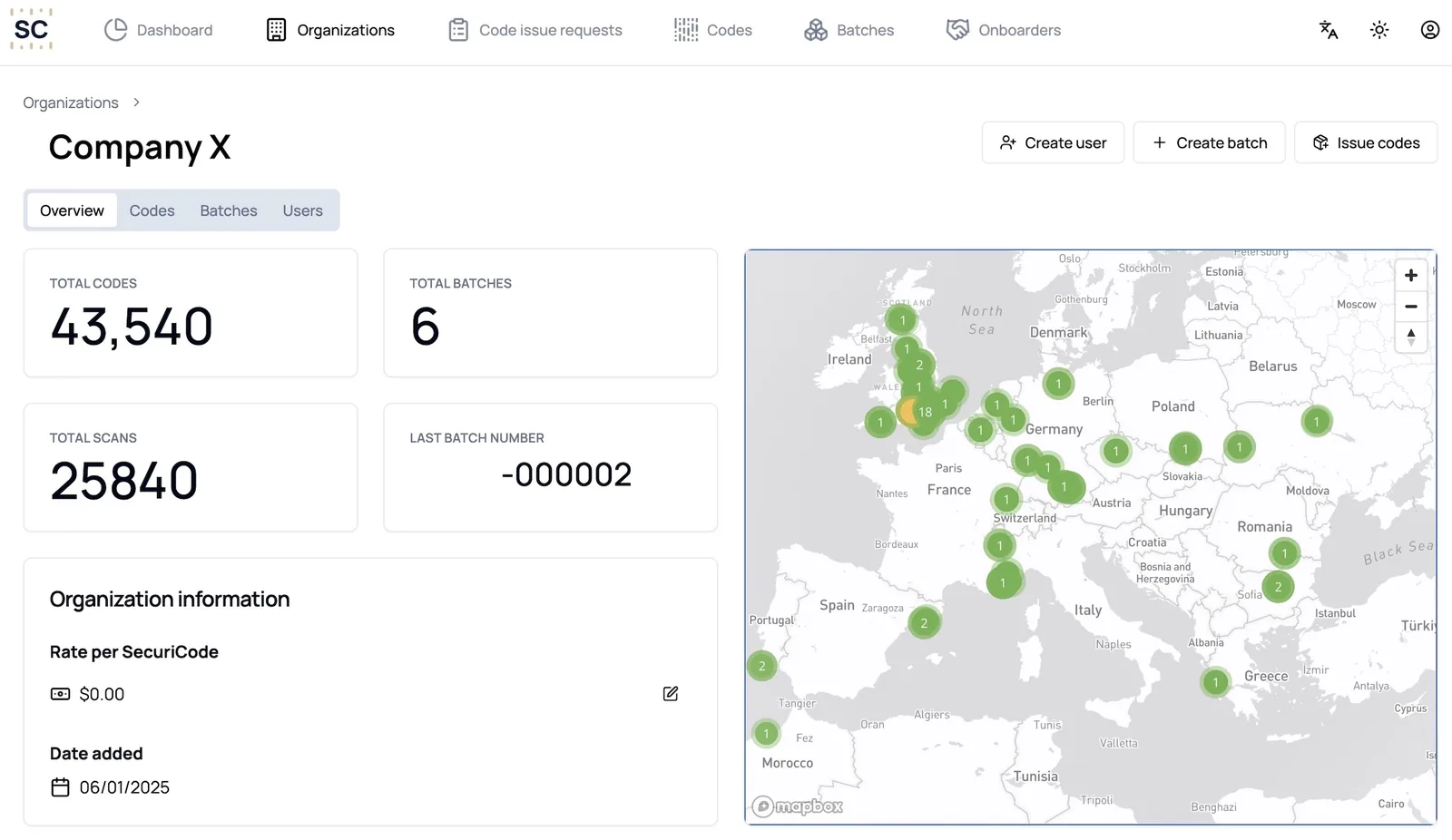
Every Securicode scan is logged with its time, date and location. If you ship a batch to Singapore, you expect its scans to appear in Singapore. If they start appearing in another country, your dashboard shows it, product by product.
The scans do not only come from consumers. Your own team, auditors and trusted partners can scan stock in stores and warehouses with the same free app. A field visit becomes a spot check: scan a few products on the shelf and see which shipment they were meant for.
- Scans plotted on a map by batch, product and date
- Stock outside its intended market is easy to spot
- Each code shown as a map dot that changes color every 10 scans (green, yellow, orange, then red over 30), so heavy scanning that may signal a copy stands out
- Scan history you can share with your distributor or lawyer
Parent and child codes
Which pallet did it come from?
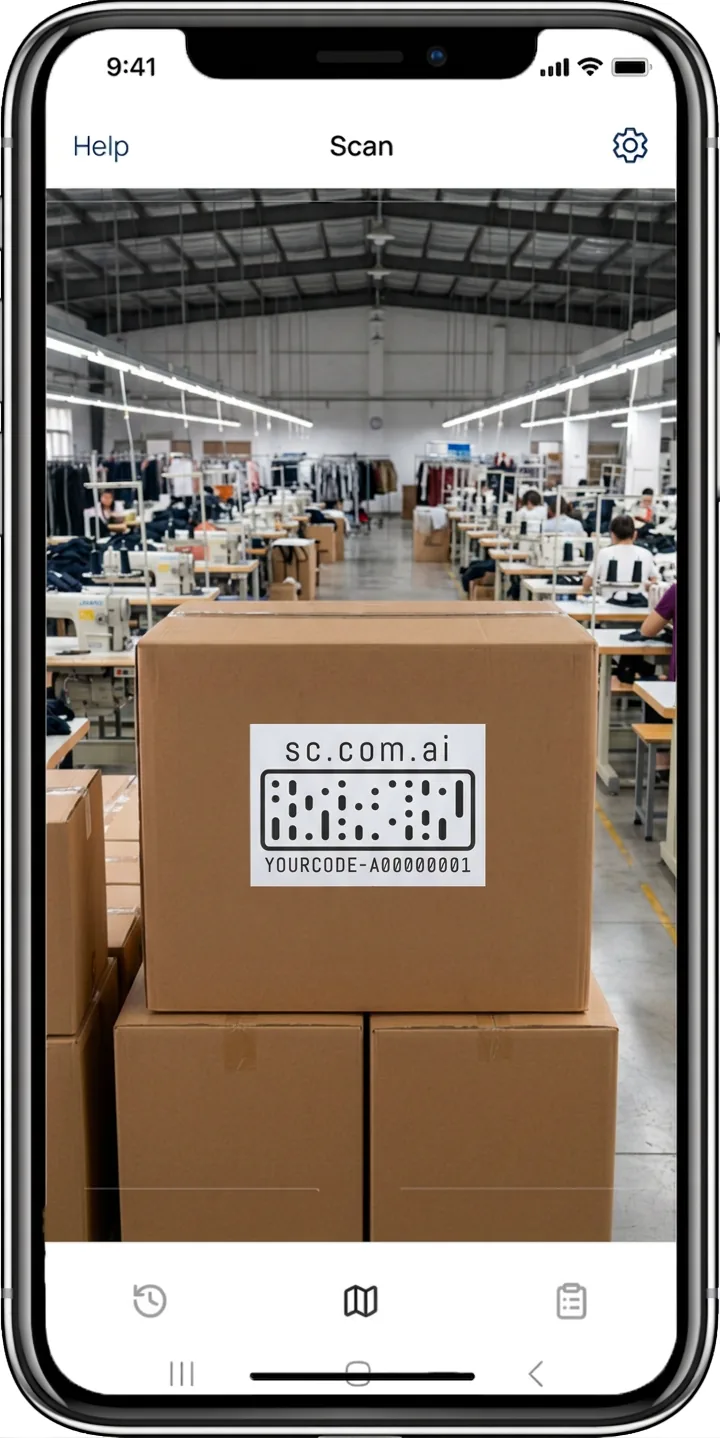
Each item code is linked to the code on its case, each case to its pallet and each pallet to its container. Your team records those links at packing, so one scan of a single bottle or box tells you which case, pallet and shipment it left in.
That turns a vague complaint, such as cheap stock turning up in Hong Kong, into a specific answer: which consignment, which date and which customer it was sold to.
An example: tracing a diverted pallet
An illustrative example of how the system can be used. It is not a real customer.
- 1
Stock ships to one market
A wine producer ships 20 pallets to its distributor in Singapore. Every bottle, case and pallet is coded and linked before the container leaves Adelaide.
- 2
Scans appear somewhere else
Six weeks later, the dashboard shows a cluster of scans in Shanghai, where the producer has a different, exclusive distributor.
- 3
The codes point to one pallet
Every bottle scanned in Shanghai traces back to the same pallet in the Singapore shipment. The rest of that shipment is scanning in Singapore as expected.
- 4
The conversation changes
The producer raises that specific pallet with the Singapore distributor, with dates and locations attached, and can show its Shanghai partner the territory is being protected.
Gray market signals and what they tell you
| What you see on the map | What it may mean | What to do next |
|---|---|---|
| Scans in a country you did not ship that batch to | Parallel import or diversion | Trace the batch to its pallet and distributor |
| A cluster of scans from one batch in an unexpected city | A reseller moving a whole shipment | Check which consignment it was and who bought it |
| The same code scanned in two places hours apart | A copied code rather than diversion | Mark the code and investigate it as a counterfeit |
| A code scanned far more often than one product would be | A likely copy, or a store display item | Review the scan history and mark it if needed |
| No scans from a market you supply | Low scanning, or stock sitting in a warehouse | Ask partners to scan on store visits |
Parallel imports are not always illegal
In many countries, reselling genuine goods across borders is lawful, so diversion is often a breach of your distribution agreements rather than a crime. Securicode gives you the facts about where stock went. What you do with them is a commercial and legal decision, so talk to your lawyer about the rules in each market.
Frequently asked questions
What is the difference between gray market goods and counterfeits?
Gray market goods are genuine products sold through channels or countries the brand did not authorize. Counterfeits are fakes made to look like your product. Securicode helps with both: diverted genuine codes show up in the wrong market, and copied codes show up as duplicates.
What is product diversion?
Product diversion is when stock sold to one distributor, customer or market is moved and resold somewhere else, usually to profit from a price difference between markets. It is the main source of gray market goods.
Do customers have to scan for this to work?
Customer scans help, but they are not the only source. Your team, auditors and trusted partners can scan stock in stores and warehouses with the same free app, which gives you reliable spot checks in the markets you care about.
Can Securicode show which distributor diverted the stock?
It shows which case, pallet and shipment a scanned product came from, based on the links recorded at packing. If you know which customer bought that shipment, you know where the stock left your channel.
Why is diversion so common in wine and spirits?
Prices for the same bottle vary widely between markets. An older industry estimate suggested Australian wine sales to China were up to 35% higher than official figures because of parallel trade (Farm Online, 2017). See wine and spirits.
Keep reading
Make every product provable
Apply for access to create Securicodes for your brand, or book a demo and we will show you a live scan.